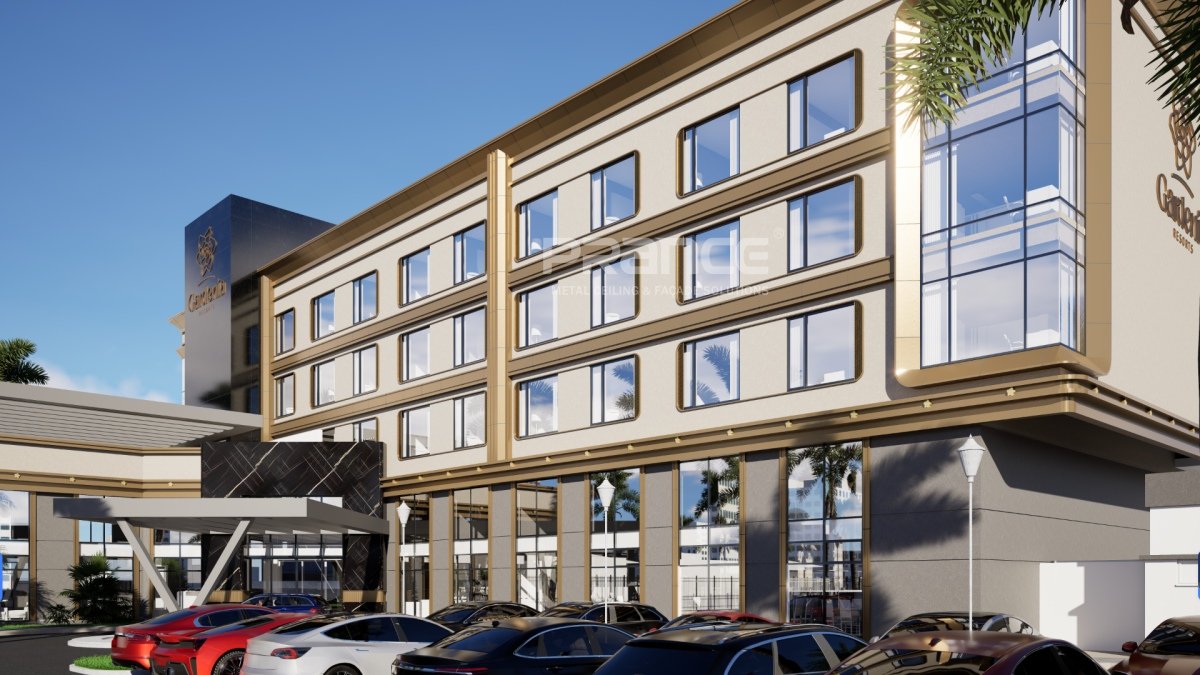
Coastal regions in the Middle East pose combined challenges of salt spray, humidity, and wind-blown sand. Limestone offers an elegant natural finish but is porous and can chemically react with salts and atmospheric pollutants, leading to surface weathering, pitting and staining. Aluminum wall cladding, when specified with marine-grade coatings and proper detailing, generally provides better long-term resistance to salt-induced corrosion. Modern coated aluminum alloys incorporate protective primers and PVDF topcoats that form stable, UV-resistant barriers; anodized options add another corrosion-resistant layer. Crucially, aluminum systems are non-porous and do not trap salts or moisture, reducing the risk of substrate deterioration. For high-rise coastal office or hotel fa?ades, aluminum¡¯s lighter weight decreases structural load and simplifies anchorage in corrosive environments. Routine maintenance for aluminum typically consists of periodic washing to remove salt deposits, whereas limestone may require specialized cleaning and resealing. When paired with ventilated rainscreen design and corrosion-resistant fixings (stainless steel or suitable alloys), aluminum cladding offers a predictable service life and cosmetic stability that many developers and architects prefer along exposed coastlines.