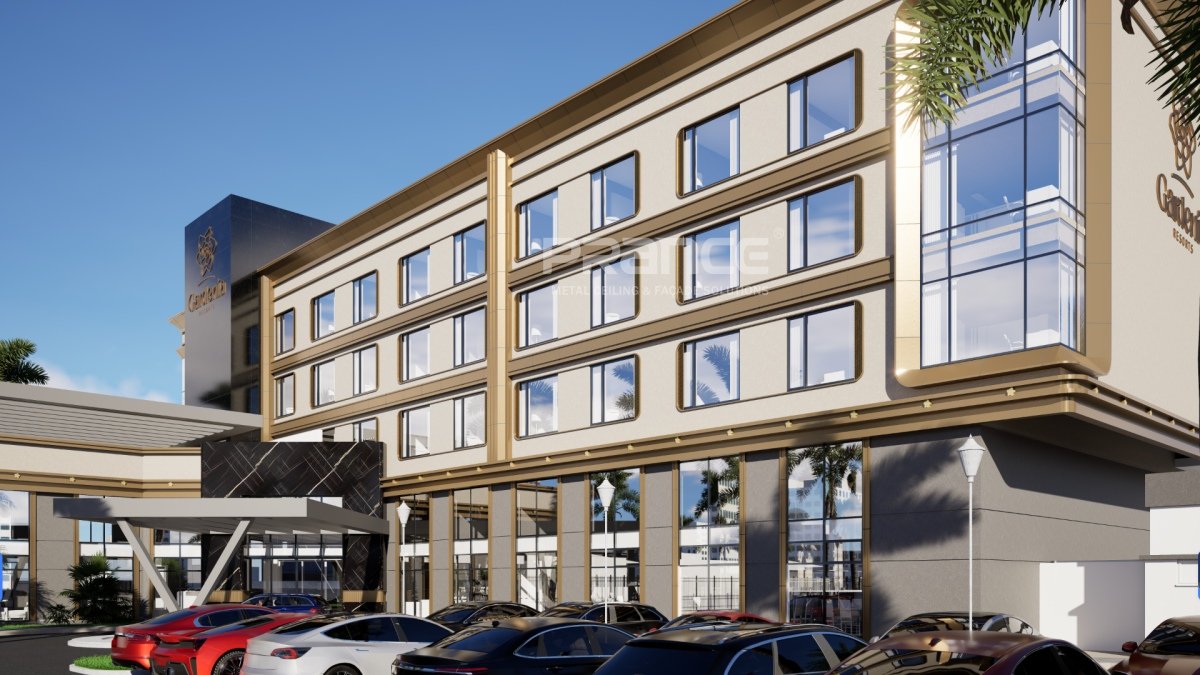
External UPVC cladding can be cost-effective for small-scale or low-rise installations but has limitations for large-scale developments. UPVC panels have lower structural stiffness, are more sensitive to thermal expansion and may require denser fixing patterns and support, increasing labour and substructure complexity for expansive fa?ades. UPVC can also degrade under intense UV exposure and high ambient temperatures common in the Middle East, leading to brittleness and colour loss. Aluminum wall cladding offers superior long-span capability, wind-load resistance and dimensional stability; engineers can design sparser subframes and larger panel modules, reducing installation time on big projects. Aluminum is also more adaptable to high-quality finishes, corporate branding, and perforated or curved geometries demanded in landmark buildings. From a regulatory standpoint, aluminum systems¡ªwhen assembled with appropriate insulation and cavity barriers¡ªare easier to certify for fire and structural compliance on multi-storey towers. For developers of large offices, shopping centres or mixed-use complexes, aluminum provides predictable performance, lower long-term risk and greater architectural expression than UPVC.