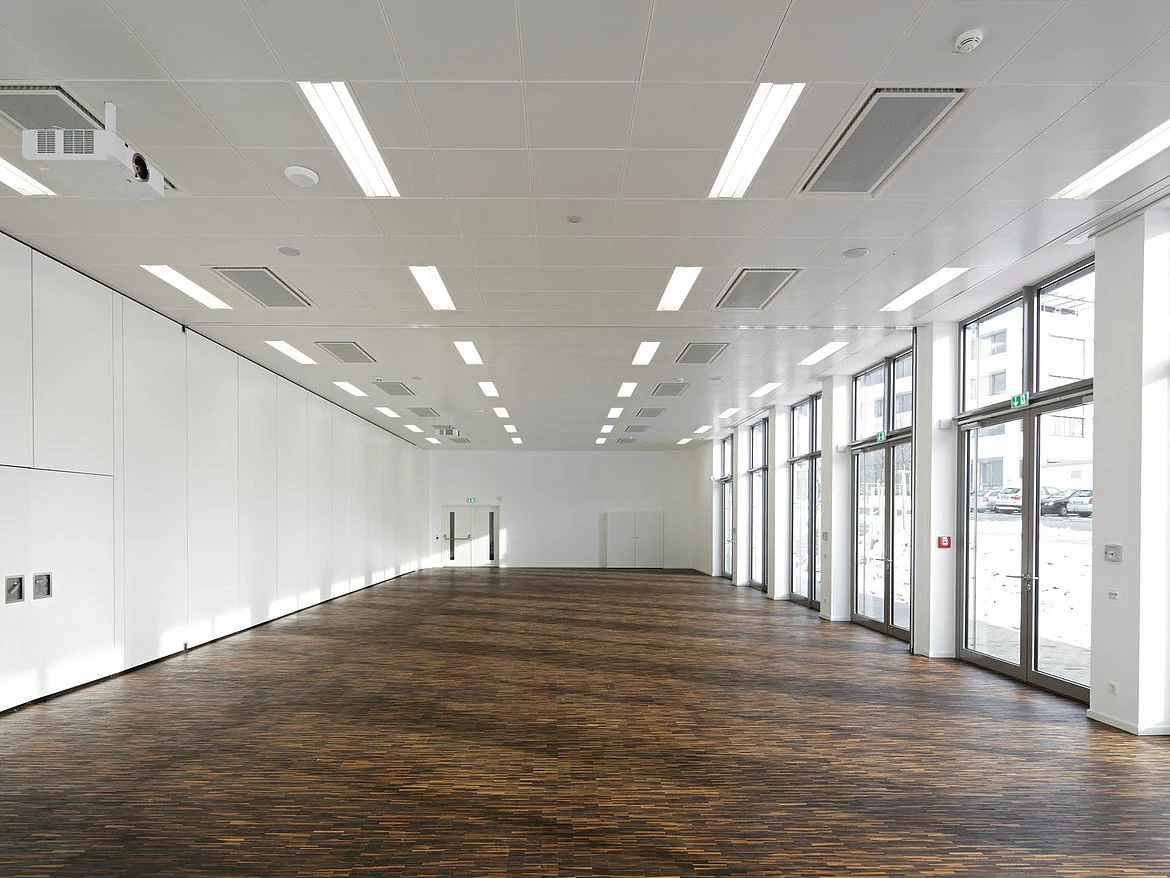
Curtain walls improve energy performance primarily through proper glass selection, thermal breaks, and insulated spandrel zones. Using low-emissivity (low-E) coatings and double- or triple-glazed units reduces heat transfer and solar gain. Thermal breaks in aluminum framing prevent conductive heat loss between exterior and interior faces. Properly detailed gaskets, pressure-equalized cavities, and continuous insulation at junctions minimize air infiltration and thermal bridging. Integrating shading devices¡ªsuch as fins, louvers or motorized shades¡ªand solar control glass can reduce cooling loads. Daylight-harvesting strategies combined with high-performance glazing help cut electric lighting demand while controlling glare. Computational thermal modeling and daylight simulations inform glass U-values, solar heat gain coefficients (SHGC), and visible light transmittance to balance energy, comfort, and fa?ade aesthetics. Well-executed curtain wall design coordinated with HVAC and lighting systems yields measurable energy savings and improved occupant comfort.