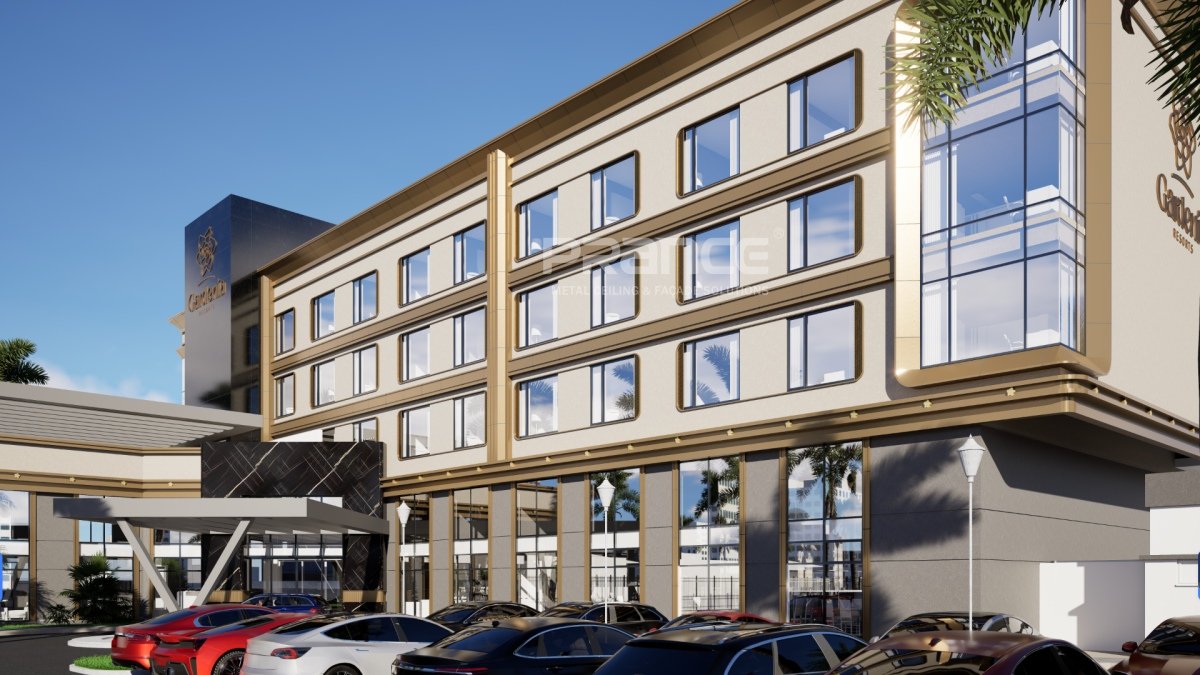
Rock or heavy stone veneers provide a premium appearance but pose challenges in high-rise construction: significant dead loads increase structural and seismic design demands, and complex mechanical fixing and anchorage add cost and schedule risk at height. Aluminum wall cladding provides similar visual options¡ªmetallic, textured or stone-look finishes¡ªwhile dramatically reducing weight. This lighter dead load lowers foundation and structural frame requirements and accelerates erection schedules because prefabricated aluminum panels are faster and safer to handle at elevation. Aluminium systems also simplify thermal and moisture control through integrated rainscreen cavities and continuous insulation ¡ª crucial for energy performance in tall buildings. At height, access for maintenance and replacement is easier with modular aluminum panels than heavy stone units, reducing fa?ade lifecycle costs and occupant disruption. When wind loads, differential movement and fa?ade tolerance are factored in, aluminum¡¯s engineered subframe solutions allow predictable performance and long service life. For developers focused on tall office towers and residential high-rises, aluminum delivers a cost-effective, safe, and design-flexible alternative to heavy rock cladding.