

Overseas facade projects often involve multiple parties, different construction requirements, and long-distance coordination. Choosing the right supplier directly affects how smoothly the design moves from drawings to installation.
Architects and developers often develop unique facade concepts with customized shapes, patterns, textures, and integrated lighting features. However, these design ideas can be difficult to achieve when a supplier lacks the engineering ability to convert drawings into accurate production solutions. Poor communication, unclear technical coordination, and inconsistent manufacturing quality may lead to installation delays and additional costs.
A suitable architectural metal panel supplier helps reduce these risks by connecting design concepts with practical construction requirements. This article explains how to evaluate suppliers based on product capability, engineering support, manufacturing control, and overseas project experience.
Choosing the Right Architectural Metal Panel System for Each Project
Each building has different facade requirements. The right architectural metal panels depend on the building type, climate conditions, design intent, and installation needs. When comparing suppliers, buyers should evaluate whether they can provide suitable systems instead of only standard products.
Solid Aluminum Panels for Commercial Facades

Aluminum metal wall panels are widely used in commercial buildings because they provide clean surfaces, precise lines, and flexible design options. Suppliers with strong fabrication capability can support large panel production, edge forming, curved shapes, and accurate connection details.
As an exterior metal panel solution for commercial facades, aluminum offers corrosion resistance, lightweight performance, and various finishing options. PVDF and powder coatings help maintain color consistency, while accurate fabrication improves panel flatness and joint alignment.
These panels are suitable for office towers, shopping centers, airports, and public buildings where facade appearance needs long-term consistency.
Architectural Metal Mesh Panels and Perforated Facade Systems
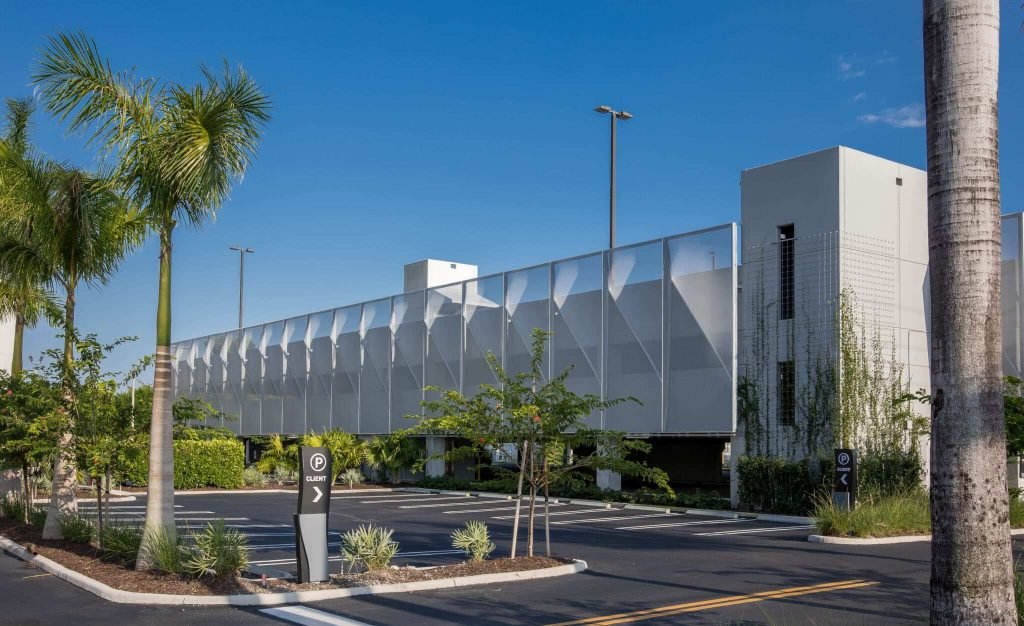
Architectural metal mesh panels and perforated panels help create layered facades with shading, ventilation, privacy control, and decorative effects.
Creating a customized architectural metal panel design requires strong fabrication capability from the supplier. Suppliers with CNC punching, cutting, and forming experience can produce accurate patterns, clean edges, and consistent panel modules, giving architects more freedom beyond standard designs.
Insulated Metal Panel Systems
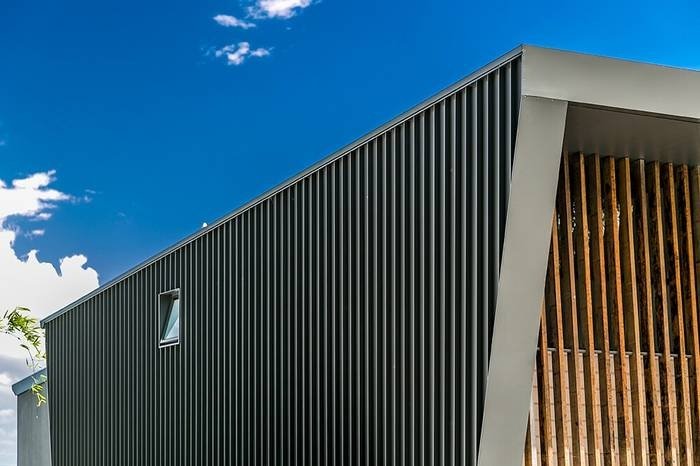
For industrial and energy-focused projects, metal panel wall systems provide both exterior protection and thermal performance. Insulated metal panels combine metal surfaces with insulation layers to improve building efficiency.
A professional metal wall panel system supplier should understand panel structure, insulation requirements, and installation methods.
For stronger facade texture, exterior metal panels for walls with profiled or corrugated surfaces can add rigidity and create shadow effects. These systems are commonly used for warehouses, logistics facilities, and industrial-style buildings.
How Professional Suppliers Protect Design Intent
A supplier’s value is often reflected in the transition from architectural concept to final installation. Designers may create detailed renders and facade concepts, but successful execution depends on accurate panel development, connection details, and construction coordination.
Experienced suppliers review designs before production to identify potential issues early. They check panel layouts, joint positions, support structures, surface finishes, and installation methods to ensure the system works as intended.
As a result, it maintains the original design vision while reducing site adjustments. Clear technical information, approved drawings, and coordinated installation guidance also help contractors complete the facade more efficiently.
5 Criteria for Evaluating Overseas Metal Panel Suppliers
1. Engineering Support and Design Conversion Ability
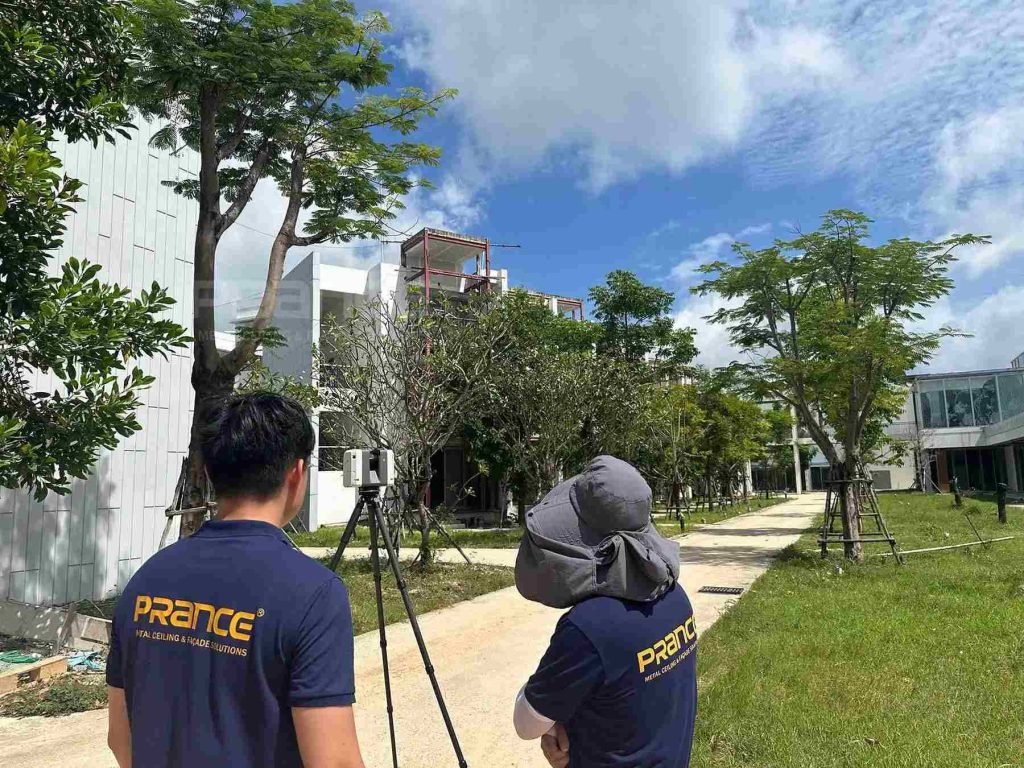
A reliable supplier should be involved before production starts. Their engineering team should review the design concept, panel layout, fixing methods, and potential installation challenges to ensure the system can be manufactured and installed correctly.
For complex facade projects, support with shop drawings, BIM coordination, material samples, and mock-up reviews helps identify issues before construction begins.For customized facade projects, small detailing errors can affect the final appearance and installation efficiency.
2. Manufacturing Quality and Finish Control
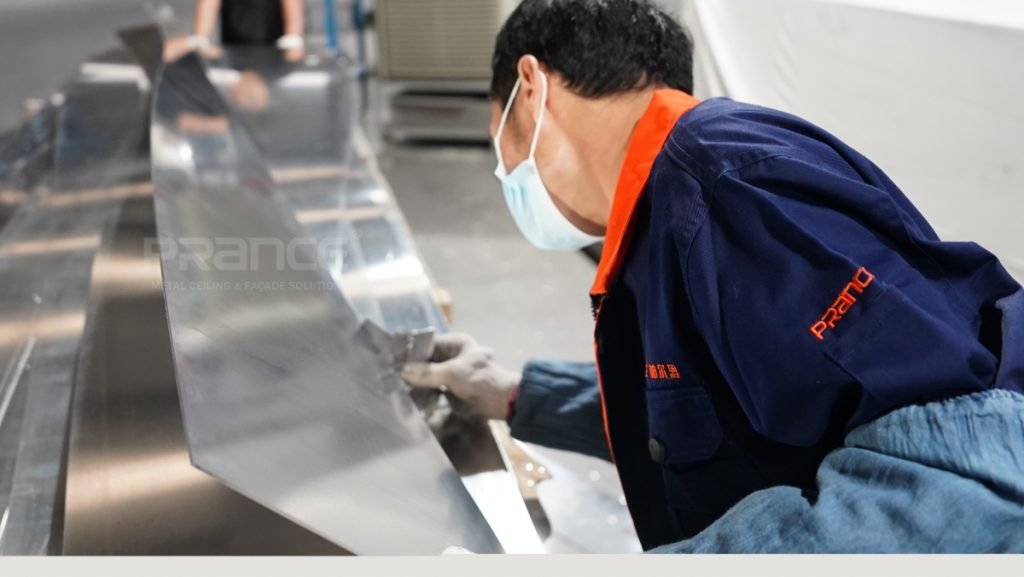
Facade quality depends on more than material selection. Production accuracy, surface treatment, and process control directly affect the final building appearance.
A professional supplier should manage key processes such as cutting, bending, welding, coating, and final inspection. They should also control batch consistency through color approval, production checks, and quality records, especially for large-scale metal panel cladding projects.
These controls help avoid visible differences between samples, factory products, and installed facade sections.
3. Customization Capability and Product Range
Overseas projects often require customized solutions rather than standard panels. Experienced suppliers usually provide different systems, including solid panels, perforated panels, mesh panels, and complex facade components.
However, customization also depends on engineering experience. Suppliers need to handle curved panels, irregular dimensions, connection coordination, and installation limitations. This capability allows architects to develop flexible facade solutions using exterior architectural metal panels without creating unnecessary construction difficulties.
4. Export Packaging and Installation Preparation
For overseas projects, product protection and installation preparation are closely connected. Proper packaging prevents damage during transportation, while clear identification systems improve site efficiency.
Suppliers should provide panel labels, packing lists, installation drawings, and component classification methods. These details help contractors quickly locate each panel and reduce mistakes during installation.
5. Overseas Project Experience and After-Sales Support
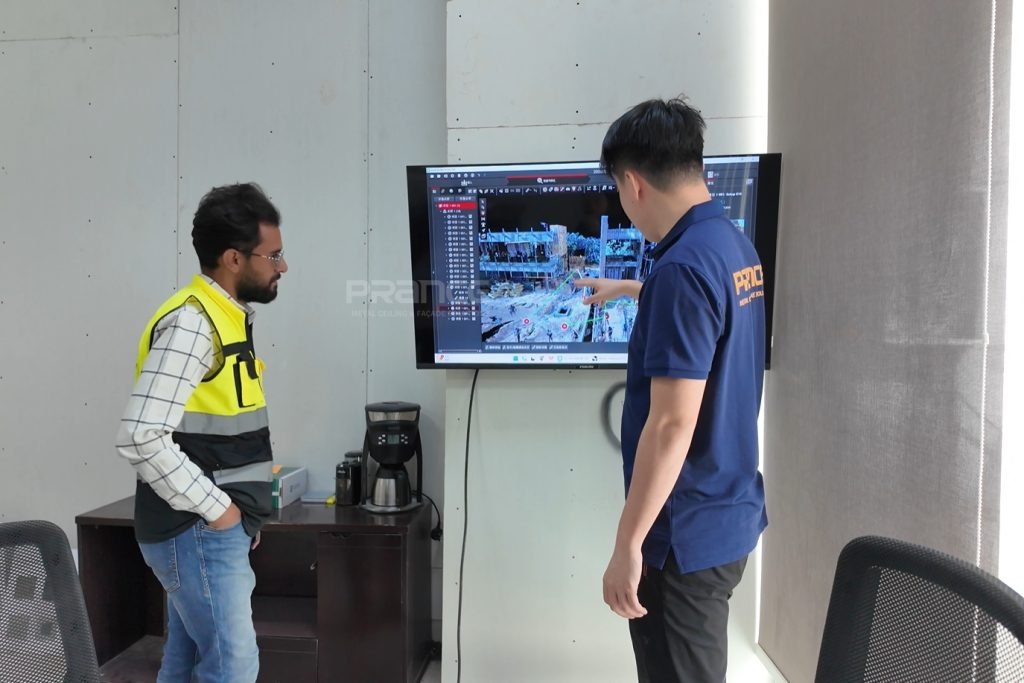
A supplier’s overseas experience reflects their ability to manage different design standards, communication methods, and construction conditions.
When reviewing previous projects, buyers should check detailed case information, including project scope, panel applications, installation photos, and technical challenges. Clear warranty terms and accessible technical support give project teams a clearer solution when issues appear after installation.
Choosing a supplier only by initial price can create additional risks. Lower quotations may result in extra costs from design changes, installation adjustments, or material replacement. Suppliers with stronger engineering support and project experience can help reduce these risks.
Conclusion
Comparing architectural metal panel suppliers requires more than comparing prices.The right supplier is not only able to manufacture panels but also understands how those panels need to be designed, coordinated, and installed on an overseas project.
For architects and developers, the best choice is a supplier that understands both design goals and construction realities. This approach helps create facades that look accurate, perform reliably, and provide long-term value.
FAQ
What should I provide when comparing architectural metal panel suppliers?
Before evaluating suppliers, project teams should prepare basic project information, including facade drawings, panel dimensions, surface finish requirements, application environment, and installation conditions. Clear project details help suppliers provide more accurate solutions and quotations. Suppliers with stronger engineering capabilities can also identify potential design issues and recommend suitable panel systems during the review process.
How can I evaluate a supplier’s engineering capability for facade projects?
A supplier’s engineering capability can be evaluated by checking whether they provide design review, shop drawings, BIM coordination, mock-up support, and installation guidance. Experienced suppliers do more than manufacture panels; they help solve connection details, fabrication challenges, and installation risks before production begins.
How do I compare the quality control of different architectural metal panel manufacturers?
Quality control should include more than checking the final product. Buyers should review how suppliers manage material selection, fabrication accuracy, surface finishing, color consistency, and inspection procedures. A reliable manufacturer should have clear production processes that help maintain consistent appearance across large facade areas.
Can an architectural metal panel supplier handle customized facade designs?
Yes, but customization capability depends on the supplier’s engineering and fabrication experience. Buyers should check whether the supplier can produce curved panels, perforated designs, special dimensions, and complex facade components. The ability to coordinate design requirements with manufacturing methods is important for achieving the intended architectural result.
What makes an overseas architectural metal panel supplier different from a local commodity supplier?
An experienced overseas supplier provides more than standard products. They usually offer technical coordination, export-ready documentation, installation support, and experience with different construction requirements. These capabilities help reduce communication issues, installation delays, and design compromises during international projects.


