

Many commercial facade projects face the same challenge: the design vision is ambitious, but project budgets and construction requirements continue to become stricter. Architects want distinctive exterior forms and refined finishes, while owners need predictable costs, reliable installation, and long-term performance.
Choosing an aluminum facade is not simply a material purchase. A low initial price may create higher lifecycle costs when the system requires additional reinforcement, complex fabrication, onsite adjustments, or frequent maintenance.
Aluminum facade system trends in 2026 are moving toward integrated facade solutions, where panel format, surface finish, structural design, and installation methods are evaluated together.
A practical facade system should answer four questions: which panel format fits the building, which finish matches the environment, which structure supports safe installation, and how fabrication can reduce project risks. This guide explains how to select an aluminum facade system that balances architectural intent, engineering performance, and total cost of ownership.
How to Choose the Right Aluminum Facade Material
Selecting the right aluminum facade materials requires more than comparing appearance and material cost. Panel format affects fabrication methods, installation efficiency, structural performance, and long-term maintenance requirements.
For commercial projects, the key decision is not which material is better, but which material matches the building requirements. Facade geometry, building height, climate exposure, fire requirements, and lifecycle cost all influence the final selection.
Solid Aluminum Sheet: For Complex Designs and Higher Rigidity

Solid aluminum panels use a single aluminum sheet structure, typically with thicknesses ranging from 2.0 mm to 3.0 mm. Unlike composite panels, they contain no core layer or bonding structure. The monolithic structure provides high rigidity and allows manufacturers to create complex shapes through bending, forming, and custom fabrication.
Compared with lightweight composite options, solid aluminum sheet offers greater design flexibility for complex geometries while maintaining surface stability. This makes it suitable for projects where facade appearance and detailing are critical.
Solid aluminum panels are also considered when fire performance is a priority. Aluminum itself is non-combustible, but the fire performance of an aluminum facade panel depends on the complete system, including insulation, backing materials, fire barriers, and connection details.
A thicker panel does not always mean higher overall project costs. Although it may increase material cost, it can reduce reinforcement requirements, simplify installation, and improve long-term durability. Project teams should evaluate the complete lifecycle cost instead of focusing only on initial material pricing.
Aluminum Composite Material (ACM): For Large Commercial Facade Areas

For large exterior surfaces, aluminum composite material (ACM/ACP) provides an efficient balance between flatness, weight, and installation performance.
Aluminum composite panels use two aluminum skins bonded around a polyethylene or mineral-filled core. This sandwich structure creates a flat and stable surface, making it suitable for large facade areas where appearance consistency is important. And ACM is commonly considered for office buildings, retail developments, and large-scale facade applications where construction efficiency and surface uniformity are key considerations.
However, ACM selection requires evaluation of the complete system. Core material, fire requirements, supporting structures, and local regulations should be reviewed together rather than focusing only on the surface finish.
Perforated Aluminum Facade for Solar Control and Design Flexibility

A perforated aluminum facade combines architectural expression with functional performance. By adjusting opening patterns, designers can influence sunlight exposure, airflow, and visual depth.
Perforated panels are often used for parking structures, commercial buildings, and feature walls because they create visual layers while reducing direct solar exposure. The perforation ratio, panel size, and fixing system must be coordinated during design development.
Accurate shop drawings and fabrication coordination help maintain pattern consistency and prevent alignment issues after installation.
How to Choose Between Solid Aluminum Sheet and ACM
The best aluminum facade panel depends on project priorities.
|
Consideration |
Solid Aluminum Sheet |
ACM |
|
Structure |
Single aluminum sheet without core layer |
Aluminum skins with polyethylene or mineral-filled core |
|
Best For |
Complex geometries, customized details, higher rigidity |
Large facade areas requiring flatness and installation efficiency |
|
Main Advantage |
Design flexibility and structural stability |
Lightweight construction and consistent surface appearance |
|
Cost Consideration |
Higher material cost but fewer reinforcement requirements |
Efficient for large-scale facade coverage |
A reliable facade system comes from matching the panel format with building conditions, construction requirements, and long-term performance goals.
Facade Finishes: Choosing Protection Based on Climate and Design Requirements
A facade finish affects both building appearance and long-term surface performance. For aluminum facade systems for harsh environments, finish selection becomes especially important because coastal salt exposure, UV radiation, and pollution can accelerate surface degradation.
Anodized finishes and PVDF coating are two common choices for exterior aluminum applications. The better option depends on project requirements. An anodized aluminum facade is often selected when architects want to preserve the natural metallic character of aluminum, while PVDF is preferred for projects requiring wider color options, stronger UV resistance, and consistent appearance across large facade areas.
Consideration |
Anodized Aluminum Facade |
PVDF Coating |
Surface Treatment |
Electrochemical process creating an integrated oxide layer |
Fluoropolymer-based coating system |
Main Advantage |
Natural aluminum texture and surface stability |
UV resistance, color retention, and color flexibility |
Suitable Applications |
Projects requiring metallic appearance and corrosion resistance |
Large commercial facades requiring long-term color consistency |
Key Consideration |
Environmental exposure and design intent |
Surface preparation, coating quality, and maintenance planning |
Anodized Aluminum Facade for Corrosion Resistance

An anodized aluminum facade uses an electrochemical process to create an oxide layer that becomes integrated with the aluminum surface rather than forming a separate coating layer.
This treatment maintains the original metallic appearance while improving resistance against oxidation and environmental exposure. It is commonly used for commercial buildings where the design intent focuses on natural metal finishes.
However, finish selection should consider more than appearance. Coastal projects and other harsh environments require evaluation of corrosion risks, surface requirements, and the overall facade system design.
PVDF Coating for UV Resistance and Color Retention

For projects requiring long-term color stability, PVDF coating remains a common choice for exterior aluminum applications. PVDF uses advanced coating technology to improve resistance against ultraviolet exposure and maintain color retention over long service periods.
Compared with anodized finishes, PVDF coatings provide greater flexibility in color selection. This makes them suitable for large commercial facades where designers require consistent colors across extensive exterior surfaces.
A durable aluminum facade depends on the combination of surface treatment, panel design, drainage details, installation quality, and maintenance planning. Selecting the correct finish at the design stage helps reduce long-term maintenance risks and improves facade performance.
How Aluminum Facade Structures Affect Installation and Performance
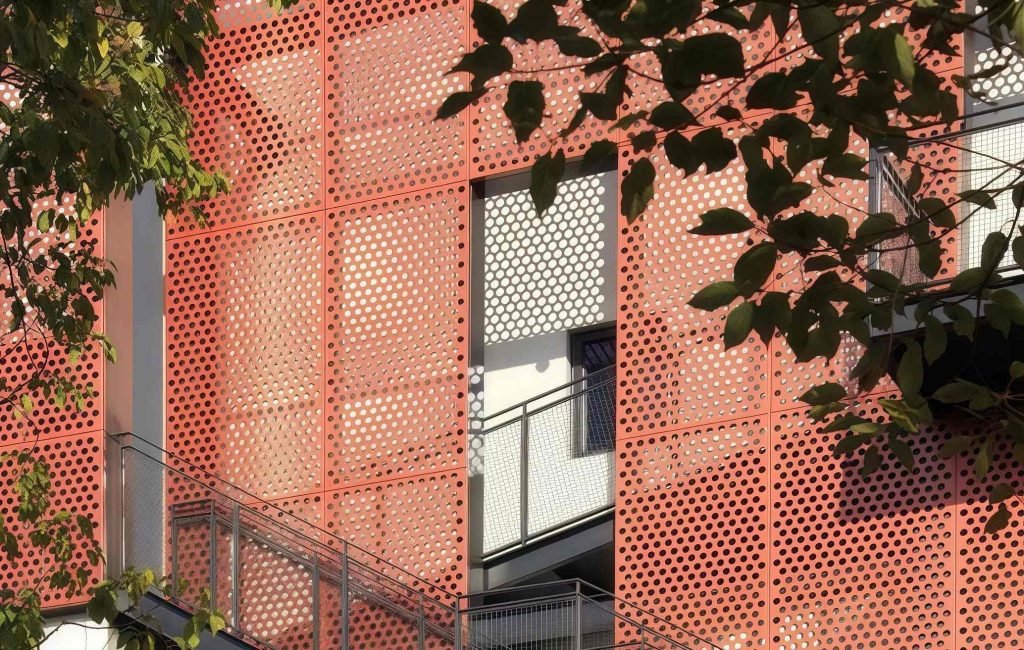
The performance of an aluminum facade system depends on how the panels connect with the building structure. The framing system affects panel alignment, wind load resistance, thermal movement, and the final appearance after installation.
A typical system includes aluminum panels, brackets, profiles, and a sub-frame carrier system. The selection of structural components depends on building height, facade geometry, and installation conditions.
Stick-Built, Unitized, and Custom Aluminum Extrusions
Stick-built systems assemble vertical and horizontal framing components on-site. This approach provides flexibility for projects with irregular facade conditions because installers can adjust panel positioning during construction.
For large commercial projects, unitized systems improve installation efficiency by using pre-assembled facade modules. This reduces onsite assembly work and helps maintain consistent quality across large facade areas.
When standard profiles cannot meet complex design requirements, custom aluminum extrusions for facades provide more precise connection solutions. These customized profiles support panel fixing, structural stability, and accurate facade alignment.
Through detailed shop drawings and structural planning, facade teams can confirm panel dimensions, fixing methods, and movement requirements before production. This coordination reduces onsite adjustments and helps ensure the completed facade matches the intended architectural design.
Aluminum Facade Selection Checklist
Selecting aluminum exterior wall panels requires coordination between architectural design and engineering performance. The right choice should consider structural requirements, environmental conditions, and installation details.
Step 1: Evaluate Structural and Design Requirements
Engineers should review wind load resistance, panel dimensions, fixing methods, and allowable deflection before selecting the facade system. A panel that looks suitable in design drawings may not perform well if the supporting structure cannot maintain stability under external loads.
Step 2: Consider Environmental Exposure and Safety Requirements
The building location affects material selection. Coastal projects require better corrosion protection, while high-UV areas require finishes with reliable color retention. Fire-rated requirements, local regulations, and building movement should also be reviewed before approval.
Step 3: Confirm Installation and Water Management Details
Correct installation determines whether the facade achieves the intended appearance and performance. Movement joints allow aluminum panels to expand and contract with temperature changes, reducing distortion risks.
Proper flashing components, weep holes, and an aligned interlocking panel matrix help manage water drainage and protect the building envelope.
Step 4: Coordinate Fabrication Before Installation
Accurate shop drawings and fixing details allow manufacturers, designers, and contractors to confirm panel dimensions and installation methods. This coordination helps reduce onsite adjustments and ensures the finished aluminum wall cladding system matches the architectural design.
Conclusion: Selecting the Right Aluminum Facade for Long-Term Value
A durable aluminum facade depends on matching the right material format, finish, structural system, and installation method.
Solid aluminum sheet provides strength and design flexibility. ACM offers efficient coverage for large commercial surfaces. Specialized finishes such as anodized treatment and PVDF coating protect facades against environmental exposure.
The most effective projects consider TCO from the beginning. Larger panels, customized profiles, and factory-controlled fabrication may increase initial planning requirements, but they can reduce onsite labor, installation time, and future maintenance costs.
With engineering support, accurate shop drawings, and customized fabrication capabilities, PRANCE helps project teams develop aluminum facade solutions that balance appearance, performance, and lifecycle value.
FAQ
1. How do I choose between solid aluminum panels and ACM for an aluminum facade?
Solid aluminum panels are suitable for projects requiring complex shapes, higher rigidity, and non-combustible metal construction, while ACM is often selected for large facade areas requiring flatness and installation efficiency. The choice depends on building requirements rather than material price alone. Project teams should consider facade geometry, building height, fire requirements, environmental exposure, and lifecycle costs before selecting the most suitable aluminum facade material.
2. Can an aluminum facade improve building energy efficiency?
Yes, but the energy performance depends on the complete facade system rather than the aluminum panel alone. An aluminum facade can support energy efficiency when it integrates thermal breaks, insulation layers, and proper cavity design. A well-engineered system helps reduce heat transfer, improve indoor comfort, and manage air and moisture movement through principles such as pressure-equalized rainscreen design.
3. What maintenance does an aluminum facade require after installation?
Maintenance requirements depend on the finish, environmental exposure, and installation quality. Coastal and industrial buildings may require more frequent cleaning because salt and pollutants can affect surface appearance. PVDF coating and anodized finishes can reduce maintenance requirements when properly specified. Regular inspections of joints, drainage paths, and fixing components help maintain long-term aluminum facade performance.
4. How can custom aluminum facade designs reduce installation risks?
Customization requires early coordination between design and engineering teams. Custom aluminum extrusions, accurate shop drawings, and fabrication reviews help transform design concepts into practical facade systems. Large patterns, curved panels, and perforated designs should be evaluated together with structural requirements to ensure the final installation matches the intended architectural appearance.
5. What factors affect the total cost of an aluminum facade system?
The total cost of an aluminum facade system includes more than the initial panel price. Material selection, fabrication complexity, structural requirements, installation efficiency, and future maintenance all influence lifecycle costs. A lower-cost panel may require additional reinforcement, more onsite adjustments, or higher maintenance expenses over time. Evaluating factors such as panel size, custom fabrication, installation methods, and long-term durability helps project teams make decisions based on total cost of ownership rather than initial purchase price alone.


