Perforated Aluminum Panels: Design Options, Acoustic Treatments, and Installation Best Practices
Introduction
Perforated aluminum panels are a versatile façade and interior cladding solution that combine aesthetic flexibility with measurable acoustic performance, corrosion resistance, and lightweight durability. Architects and specifiers face the dual challenge of achieving design intent while meeting acoustic targets and long-term maintainability—especially in demanding climates such as Indonesia’s tropical coastal zones. This guide explains technical features, design options, proven acoustic treatments, installation protocols, and practical procurement strategies. It aims to give specifiers and project teams clear, actionable steps to choose perforated aluminum panels that meet both aesthetic and performance requirements in Indonesia’s variable climates.
Perforated Aluminum Panels: Technical Features and Material Choices
Material alloys and finishes for perforated aluminum panels
Aluminum alloys commonly used include 3003, 3004, and 5052; 5000-series alloys offer higher strength and corrosion resistance for coastal projects. Finishes range from PVDF and polyester powder coat to anodizing; PVDF coatings deliver long-term color retention in tropical UV exposure.
Perforation patterns, open area, and structural implications
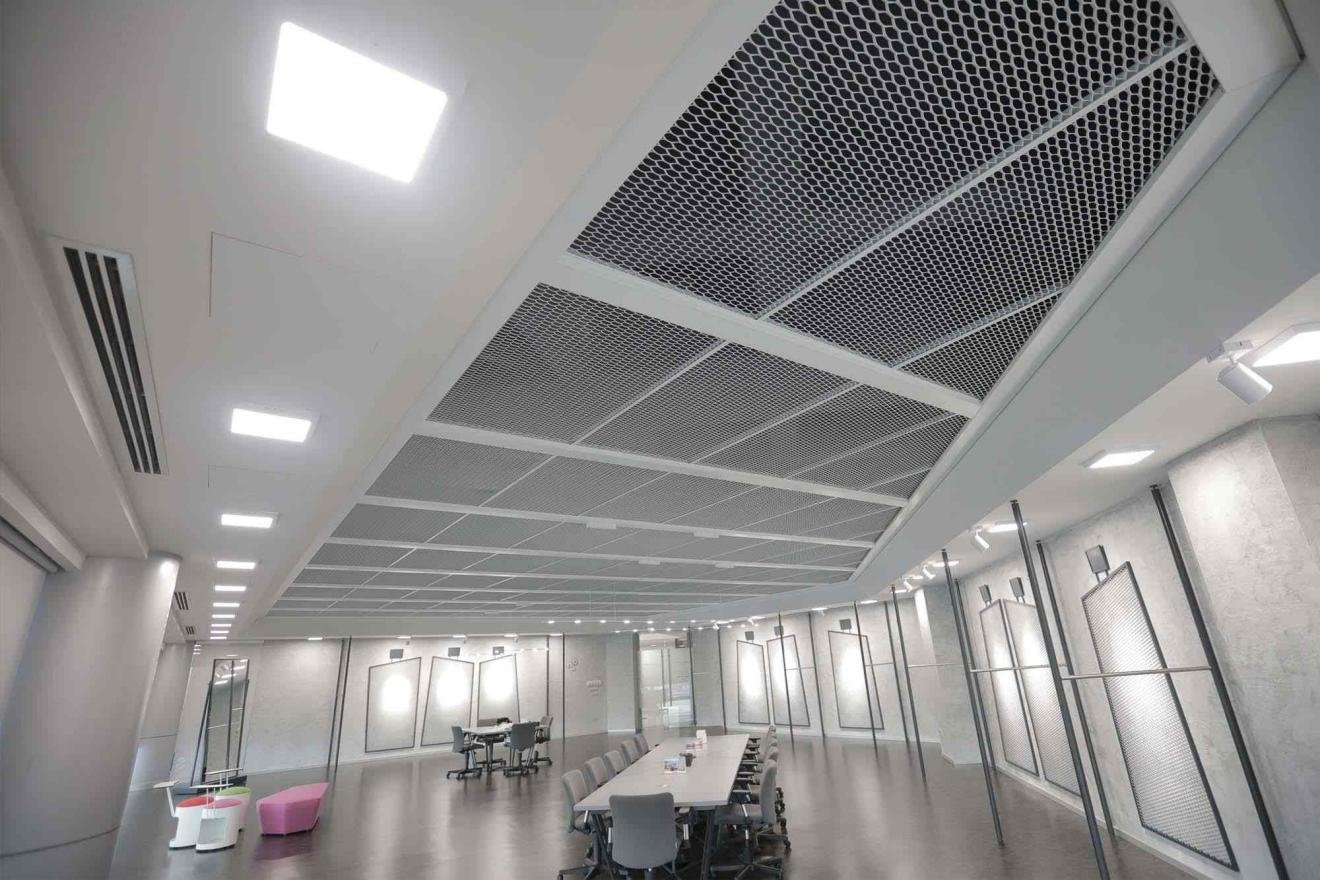
Pattern choice (round, slot, elongated, decorative) affects open area percentage, visual transparency, and structural stiffness. Open area typically ranges from 10%–40%; higher open area improves airflow but reduces stiffness and may require increased gauge or additional substructure.
Acoustic performance metrics and testing methods
Acoustic performance should be specified using NRC (Noise Reduction Coefficient) and αw (weighted absorption coefficient) measured by ASTM C423 or ISO 354. For façade use, wind and rain noise tests should reference ASTM E90 and ISO standards for exterior noise mitigation. Include target pass/fail criteria in project specifications. Additionally, include octave-band data for low-frequency performance when HVAC or traffic noise is a concern; perforated assemblies without low-frequency backing will show reduced performance below 250 Hz.
Design Considerations for Perforated Aluminum Panels
Aesthetics: pattern, scale, and visual depth
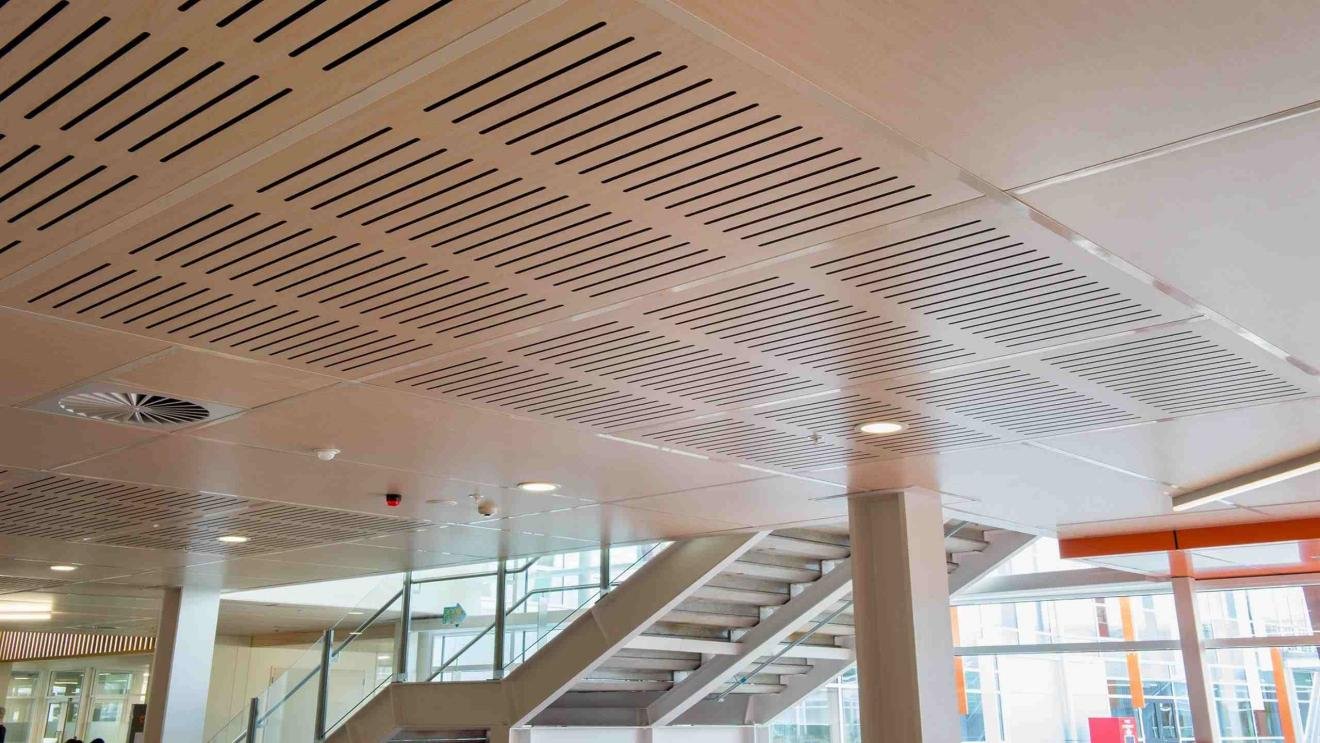
Pattern scale should be chosen relative to viewing distance: small, dense perforations suit close interior spaces; larger or decorative patterns read better from distance. Layering perforated panels over contrasting back panels increases perceived depth and allows backlighting effects.
Thermal and moisture considerations in Indonesia
Thermal expansion, condensation, and salt corrosion are significant in Indonesia. Use aluminum grades with anti-corrosion properties, allow 2–4 mm expansion gaps per linear meter, and specify stainless-fasteners and drainage behind panels to prevent trapped moisture.
Specifying for acoustics: methods and materials
Perforated aluminum panels alone provide limited absorption. Combine panels with absorptive infill such as mineral wool (glass or stone wool, density 40–80 kg/m³) or foam-backed core and use cavity depth of 25–75 mm for mid-to-high frequency absorption. Include acoustical test requirements in the specification: target NRC ≥ 0.6 for high-performance interiors.
Perforated Aluminum Panels: Acoustic Treatments and Solutions
Selecting perforated aluminum panels patterns for acoustic performance
Perforation diameter, spacing, and open area determine acoustic transparency. Typical acoustic panels use 1.0–3.0 mm holes with open areas of 10%–25% paired with 25–50 mm cavities. Use backed perforated panels with non-woven acoustic fabrics or bonded mineral wool for predictable absorption.
Backing materials and cavity configurations
Options: – Mineral wool batts — proven fire performance and stable acoustics. – Acoustic foam — lighter, easier to shape but check fire ratings. – Non-woven fabric — protects infill from dust and improves durability. Design with ventilated cavities and moisture-resistant facings. For outdoor canopies, use hydrophobic treatments and drainage paths.
Measurement and verification
Require laboratory tests per ASTM C423 or ISO 10534 for absorption coefficients and specify on-site verification using in-situ measurements where possible. Include acceptance criteria and allowable tolerances in the contract.
Perforated Aluminum Panels: Installation Best Practices
Subframe and fixing strategies for perforated aluminum panels longevity
A robust subframe is critical. Typical systems use aluminum T-rail or galvanized steel carrier rails with adjustable brackets to allow plumb and expansion. Fasteners should be stainless steel (A2 or A4 depending on corrosion risk). Provide 10–20 mm resilient clips where acoustic isolation from structure is needed.
Sealing, drainage, and weatherproofing
For exterior installations, use continuous perimeter gaskets and pressure-equalized cavities when necessary. Design drainage channels to avoid water pooling; provide insect screens where ventilation is required but pests are a concern.
Installation tolerances and QA checkpoints
Key tolerances: – Panel flatness: ≤ 3 mm per 1 m. – Gap uniformity: ±1 mm. – Fastener torque and coating inspection: document during installation. Implement a quality control plan with pre-installation mock-ups, shop drawings sign-off, and on-site inspection checklists. Use photographic records and signed hold-points for stages: subframe erection, panel delivery inspection, panel fixing, and final cleaning. Track non-conformances and remedial actions in a formal NCR register.
Perforated Aluminum Panels: Performance, Durability, and Maintenance
Corrosion resistance and lifecycle considerations
PVDF-coated panels typically offer 20+ years of color warranty under proper maintenance; anodized finishes resist abrasion but have limited color options. For coastal Indonesia projects, specify higher-grade alloys and A4 stainless steel fixings to resist chloride corrosion.
Cleaning and maintenance protocols
Simple maintenance: rinse with fresh water quarterly in coastal zones and annually elsewhere. For grease or pollutants, use mild detergent and soft brushes. Avoid abrasive cleaners that damage coatings. Replace damaged panels within 1–2 weeks to prevent progressive corrosion.
Manufacturing and quality control best practices
Manufacturing should include CNC punching/laser cutting CNC controls, tension leveling, and batch-specific coating tests (film thickness, adhesion, color fastness per ASTM D3359 and D523). Request mill test reports and finish certification as part of procurement. Insist on production sampling for every finish batch, and specify acceptance criteria for coating thickness (e.g., 25–30 microns for polyester, 25–35 microns for PVDF) and adhesion tests. Good manufacturers will provide continuous process records, batch numbers, and traceability from coil to finished panel.
Case Example: Tropical Office Fit-Out in Jakarta, Indonesia
Project brief and design goals
A hypothetical 12-floor office in Jakarta sought a breathable, visually striking ceiling and façade soffit that reduced HVAC noise and allowed integrated lighting. The design team specified perforated aluminum panels with a 20% open area and PVDF finish.
Solution and outcomes
Solution included 1.5 mm round perforations at 10 mm pitch, 50 mm mineral wool cavity, and ventilated subframe. Acoustic testing targeted NRC 0.65 and achieved 0.68 in laboratory testing. PVDF coating on 5052 alloy with A4 fixings passed accelerated salt spray tests simulating coastal conditions. The modular design reduced on-site waste by 18% and allowed panels to be removed for service access within 30 minutes per bay.
Lessons learned for local specifiers
Choose coatings and fixings appropriate for salt exposure.
Require shop mock-ups and lab-tested acoustic assemblies.
Allow for easy panel removal to access services.
Budget for periodic maintenance and immediate replacement of any blistered finishes to avoid accelerated corrosion.
Consider modular panel sizes (e.g., 600×600 or 1200×600 mm) to simplify logistics and reduce waste on tight urban sites in Indonesia.
Comparison Table: Common Perforated Aluminum Panel Choices
Trade-offs summary
Different perforation strategies balance acoustics, transparency, and cost. Lower open area increases stiffness but reduces ventilation; decorative choices may increase fabrication complexity.
Selection guidance for specifiers
Select performance first—define acoustic targets, then choose pattern and backing that meet those targets within budget and structural constraints.
Option
Typical Open Area
Best for
Trade-off
Solid perforated + mineral wool
10–25%
High acoustic interiors
Higher material cost, reduced stiffness
High open area decorative
30–40%
Visual transparency, ventilation
Lower acoustic absorption
Slot perforation + foam backing
12–20%
Linear aesthetic, HVAC integration
Foam may have fire limitations
Specification Checklist for Decision-Makers
Essential technical specifications
Material & Alloy: Specify alloy (e.g., 5052) and temper. Define minimum thickness (e.g., 1.2–2.0 mm for ceilings, 2.0–3.0 mm for exterior soffits depending on span).
Finish: PVDF or anodized; specify film thickness and color standard and require gloss and color difference tolerances (ΔE).
Perforation: Hole diameter, pitch, pattern, open area percentage. State maximum acceptable burr, edge deformation, and acceptable variance in open area per panel.
QA Documentation: MTRs, coating certificates, shop drawings, and mock-up sign-off.
Addressing Common Concerns and Objections
Fragility and perceived weakness
Perforated panels are engineered elements; increasing gauge, reinforcing ribs, or reducing open area restores stiffness without compromising visual design.
Acoustic performance concerns
When specified as part of a tested assembly—perforated face, absorptive backing, and cavity depth—perforated panels reliably reach NRC targets. Require lab test evidence.
Coating and finish durability worries
Use PVDF coatings of ≥70% Kynar 500 or equivalent weathering systems and mandate accelerated weathering and salt spray test reports during procurement.
Actionable Recommendations (Step-by-Step for Specifiers)
Design-phase checklist
Define performance goals: acoustic targets, fire rating, visual openness.
Model acoustic performance with proposed hole pattern and backing.
Coordinate with MEP for service access and integration.
Procurement & QA-phase checklist
Select manufacturer with demonstrated QC (CNC control, coating tests). Ask for recent project references and on-site performance records in similar climates.
Require shop mock-up and laboratory test results before mass production; include a schedule for mock-up approval that does not delay critical path.
Include warranty durations and maintenance schedule in contract and define response times for remedial works (e.g., 14 calendar days for emergency replacement).
Procurement and Contract Clauses to Consider
Warranty and performance clauses
Require manufacturer warranties for finish (years) and structural performance, with minimum durations stated (e.g., 10 years for PVDF color retention, 5 years for workmanship).
Specify remedies for defective coating or structural failures including repair obligations, replacement lead times, and liquidated damages if performance deadlines are missed.
Acceptance testing and hold points
Specify acceptance criteria for acoustic lab tests and shop mock-ups.
Include hold-points for pre-installation inspections and finishing checks.
Conclusion
Key takeaways
Perforated aluminum panels offer a practical path to combine architectural expression with acoustic control when specified as part of a holistic assembly with proper materials, backing, and substructure.
Next steps for project teams
Begin with clear performance targets, demand certified lab data, and require a mock-up to verify aesthetics and acoustics prior to full production and installation. Engage manufacturers early during schematic design to optimize panel sizes and minimize waste. Coordinate finish selection with façade consultants and local maintenance teams to ensure lifecycle assumptions align with actual maintenance budgets.
FAQ
Quick answers
Q1: What are perforated aluminum panels best used for?
A1: Perforated aluminum panels are ideal for acoustic ceilings, façade screens, and ventilated cladding where visual appeal and airflow are required. They balance form and function and can be combined with absorptive backings to meet acoustic targets.
Q2: How do perforated aluminum panels improve acoustics?
A2: Panels act as a facing to absorptive materials; the perforation pattern, open area, and cavity depth control absorption. Specifying mineral wool or acoustic foam behind perforated aluminum panels typically yields predictable NRC values.
Q3: Are perforated aluminum panels suitable for coastal Indonesia?
A3: Yes—when you specify corrosion-resistant alloys (e.g., 5052), PVDF finishes, and A4 stainless fasteners, perforated aluminum panels perform well in coastal Indonesia environments.
Q4: What finish is best for long-term durability?
A4: PVDF-coated finishes with proven film thickness and adhesion tests offer long-term color retention. Anodized aluminum provides abrasion resistance but has limited color variety.
Q5: How should perforated aluminum panels be maintained?
A5: Rinse panels regularly, clean with mild detergent for stains, inspect fixings annually, and replace damaged panels promptly to prevent corrosion progression.
Looking for custom-designed ceilings, walls, or facades to elevate your project? Explore PRANCE Design’s integrated design and manufacturing solutions, and create the perfect fit for your architectural needs today!

 Perforated aluminum panels are a versatile façade and interior cladding solution that combine aesthetic flexibility with measurable acoustic performance, corrosion resistance, and lightweight durability. Architects and specifiers face the dual challenge of achieving design intent while meeting acoustic targets and long-term maintainability—especially in demanding climates such as Indonesia’s tropical coastal zones. This guide explains technical features, design options, proven acoustic treatments, installation protocols, and practical procurement strategies. It aims to give specifiers and project teams clear, actionable steps to choose perforated aluminum panels that meet both aesthetic and performance requirements in Indonesia’s variable climates.