

A curtain wall manufacturer working on overseas projects has to coordinate the facade from design through fabrication and site delivery. Curtain wall systems bring together aluminum profiles, glass, anchors, seals, structural connections, and installation interfaces, making coordination across these stages an important part of manufacturer selection.
For architects, contractors, developers, and procurement teams, the question is how well the manufacturer can connect design requirements with engineering, fabrication, quality control, delivery, and site support. This coordination needs to continue from drawings through production, with technical information, components, and installation requirements aligned across different project stages and locations.
1. Check Curtain Wall System and Project Experience
Check which curtain wall systems the manufacturer has actually delivered, especially on projects with a similar system type, scale, or facade complexity. A long product list is less useful than proven experience with the system required for your project.
For unitized curtain wall, stick curtain wall, framed glass curtain wall, and structural glazing, relevant experience should cover the corresponding requirements for aluminum profiles, panel modules, joints, anchors, glazing assembly, fabrication tolerances, and site installation. Custom facade designs may also require modified profiles or project-specific interface details.
Previous projects can help show whether a curtain wall manufacturer has experience relevant to your proposed system and construction method. Similar project references, system drawings, or completed facade details provide stronger evidence than a general claim that multiple curtain wall systems are available.
2. Review Engineering and Curtain Wall Details

The engineering team needs to connect architectural and structural requirements in the curtain wall details. These details cover mullions, transoms, brackets, anchors, expansion joints, perimeter interfaces, spandrel areas, drainage paths, and connections to the building structure.
For custom projects, check whether the manufacturer can develop shop drawings and fabrication drawings while coordinating profile sections, panel modules, glass build-ups, tolerances, and interfaces with adjacent facade materials. Sample drawings from comparable projects can also help show the level of technical detail the engineering team can provide.
This capability becomes more important on overseas projects, where fabrication and installation may take place in different countries. The drawings need to carry enough information from design through production and site installation without leaving critical interfaces open to interpretation.
3. Check Glass and Framing Coordination
For a glass curtain wall project, evaluate how the manufacturer coordinates the glass specification with the framing system rather than simply reviewing the available glass types. Glass dimensions and build-ups need to align with aluminum profiles, panel modules, structural requirements, and frame tolerances.
Check how the manufacturer manages the interfaces between insulated, laminated, tempered, or spandrel glass and components such as gaskets, sealants, and setting blocks. For structural glazing, the coordination between the glazing configuration and supporting system also needs to be clearly defined before fabrication.
The manufacturer does not need to produce the glass in-house. More important is whether it has a clear process for coordinating architectural glass and glazing requirements with curtain wall engineering, fabrication, and assembly.
4. Verify How Performance Requirements Are Engineered
A curtain wall manufacturer needs to connect project performance requirements with the proposed curtain wall system. Wind pressure, air infiltration, water penetration, thermal movement, structural deflection, and seismic movement can affect the system differently depending on building height, location, facade orientation, and design conditions.
A test certificate alone does not show how these requirements are applied to the proposed system. Higher wind loads, for example, may require changes to mullion depth, reinforcement, glass thickness, anchor design, or panel dimensions. Water-management requirements may affect drainage paths, gaskets, joints, and pressure-equalized details.
When comparing manufacturers, check whether these performance criteria are already reflected in the engineering and curtain wall details before fabrication. This provides a clearer indication of engineering capability than reviewing test documentation alone.
5. Assess Manufacturing and Quality-Control Capability
Once the design is approved, engineering information must transfer accurately into production. For a curtain wall manufacturer, this means keeping fabrication aligned with the approved project information.
Production control covers aluminum profile machining, cutting, drilling, assembly, glazing preparation, surface finishes, and component identification. For customized curtain wall systems, profile dimensions, hole positions, assembly details, and other fabricated components should match the approved drawings.
Quality control should verify this consistency at both the material and finished-component stages. Depending on the project, checks may cover coating appearance, glass configuration, brackets, fasteners, gaskets, and packaging identification before shipment.
For large projects, sample panels or mock-ups allow project teams to review appearance, interfaces, fabrication quality, and assembly methods before full production begins.
Together, these checks show whether the manufacturer can carry approved curtain wall requirements from drawings into repeatable production before the components reach the overseas site.
6. Review Overseas Project Coordination
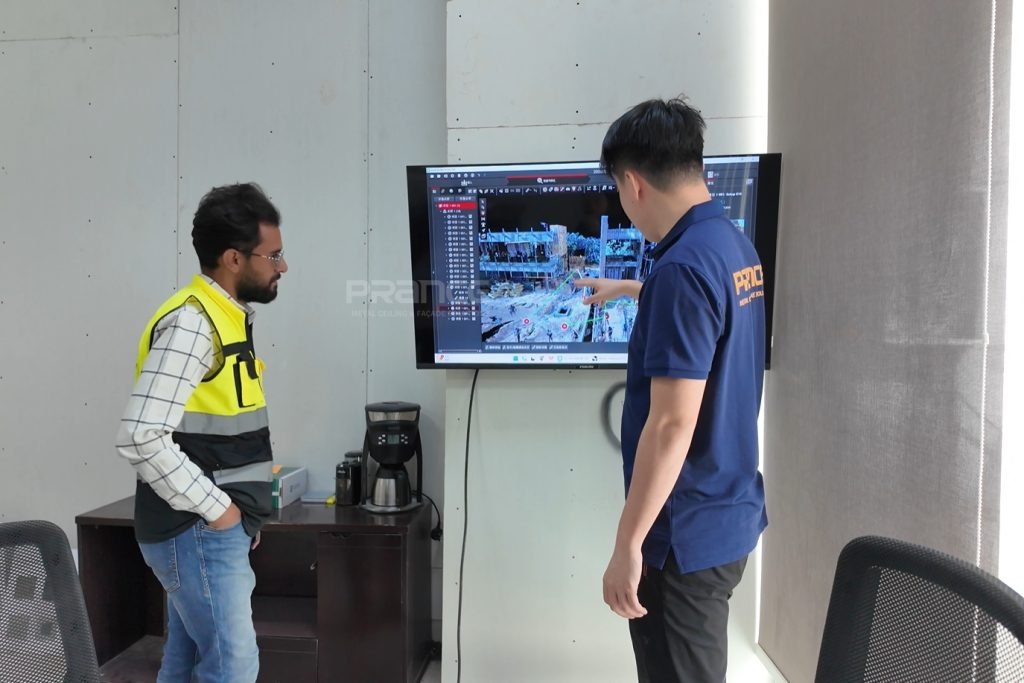
International projects introduce coordination issues that domestic supply does not always face. A curtain wall manufacturer needs to plan production and delivery around the construction sequence at the overseas site.
Production sequencing, packing lists, container loading, component labels, and drawing references all affect site work. Curtain wall components often arrive in multiple batches, so clear identification can make a major difference during unloading and installation.
Packaging needs to match the product type. Glass units, aluminum frames, profiles, brackets, and decorative components have different protection requirements during handling and transportation.
Drawings, packing lists, component codes, and installation references also need a consistent identification system so the contractor can trace site materials back to the approved facade information.
7. Check Installation Support and Responsibilities
The manufacturer may not perform the installation, especially on overseas projects, but technical support still needs to continue after the products leave the factory.
For curtain wall installation, support may include installation drawings, node details, sequencing guidance, component identification, and responses to site technical questions.
Customized systems may require closer support when the local contractor has not previously installed the same curtain wall configuration.
Factory and site responsibilities also need to be clearly defined. Structural substrates, primary anchors, sealant application, field measurements, access conditions, and installation tolerances should not be left unclear.
A responsibility matrix can define what support the curtain wall manufacturer provides and what the local contractor handles when site conditions differ from the original drawings.
Curtain Wall Manufacturer Selection Overview
|
Evaluation Area |
What to Check |
Why It Matters |
|---|---|---|
|
System experience |
System type, similar projects |
Confirms relevant project experience |
|
Engineering |
Shop drawings, details, interfaces |
Connects design with fabrication |
|
Glass coordination |
Glass build-up, framing interfaces |
Confirms system compatibility |
|
Performance |
Wind, air, water, movement |
Verifies project requirements |
|
Manufacturing & QC |
Fabrication, assembly, quality checks |
Controls production consistency |
|
Overseas coordination |
Packaging, labeling, documentation |
Supports overseas site handling |
|
Installation support |
Drawings, sequencing, responsibilities |
Clarifies site support and scope |
Look Beyond the Curtain Wall Price

The lowest quotation does not necessarily represent the lowest project cost. When comparing a curtain wall manufacturer, first check whether each supplier is quoting the same project scope.
A price may exclude engineering development, special profiles, mock-ups, testing, accessories, packaging, technical documentation, or installation support. Two curtain wall manufacturers can therefore quote different scopes while appearing to offer the same system.
Before comparing prices, confirm that each quotation is based on the same drawings, system configuration, glass specification, finish, performance requirements, accessories, and delivery scope.
For overseas projects, differences in technical scope and support can affect costs beyond the initial quotation. Price should therefore be evaluated together with the engineering, manufacturing, coordination, and support included in the offer.
FAQ
What should I ask a curtain wall manufacturer before placing an order?
Ask about curtain wall system experience, engineering support, glass and aluminum specifications, performance requirements, shop drawings, quality control, packaging, and installation support. The manufacturer should also clarify which parts of the facade package are included in the quotation and which remain the contractor’s responsibility.
Should a curtain wall manufacturer provide shop drawings?
For customized projects, shop drawings are normally an important part of coordination. They define system sections, panel modules, anchors, interfaces, glazing details, and fabrication information. The drawing scope should be agreed before production because architectural drawings alone may not provide enough detail for manufacturing.
How can I verify a curtain wall manufacturer’s project experience?
Review projects that use a similar curtain wall system or have comparable facade complexity. Relevant project references, system drawings, or completed facade details can provide better evidence of capability than a general project portfolio. For overseas projects, experience with international coordination is also relevant when evaluating the manufacturer.
What installation support should a curtain wall manufacturer provide?
The required support depends on the project scope, but it may include installation drawings, node details, sequencing guidance, component identification, and responses to site technical questions. The manufacturer should also clarify which installation responsibilities belong to the factory and which remain with the local contractor.
How can I compare curtain wall manufacturers fairly?
Compare manufacturers using the same project information and scope. Review system capability, engineering responsibility, materials, glazing, performance requirements, quality control, documentation, packaging, and technical support alongside price. This helps identify differences in scope and capability before making a supplier decision.


