Specifying PVDF, Anodized, and Powder Coating Finishes for Long-Lasting Facades and Ceilings — PVDF aluminum finish
Introduction
PVDF aluminum finish is widely specified by architects and building envelope engineers when project goals include exceptional UV stability, chemical resistance, and long-term color retention. Choosing the correct finish reduces maintenance cycles, protects brand assets and reduces total cost of ownership. This guide provides practical specification language, measurable QA targets, installation best practices, and procurement controls that architects, façade engineers, and contractors can apply directly to project documentation.
PVDF aluminum finish: Technical Features
PVDF aluminum finish chemistry and construction
PVDF (polyvinylidene fluoride) coatings are fluoropolymer systems typically formulated as multi-coat architectures: primer, color coat (commonly 70% PVDF resin by weight), and an optional clear coat. The fluoropolymer backbone provides exceptional resistance to UV degradation and chemical attack. Typical lab tests referenced in specifications include ASTM D4587 (QUV accelerated weathering), ASTM D7869 (color change), and ISO 2812 (soil resistance) to quantify long-term appearance retention.
Film build, thickness guidance, and tolerances
Specify film thickness tolerances: primer 10–15 µm, color coat 25–35 µm, clear coat 10 µm (where used). Require SSPC-PA2 or equivalent measurement methods on production panels. Include acceptance criteria that account for ±10% variation but require corrective actions when out-of-range batches are detected. For highly formed profiles, call for bend-test samples to verify film continuity at specified radii.
Mechanical performance and adhesion for PVDF aluminum finish
PVDF systems exhibit balanced hardness and flexibility, enabling bending and forming in fabrication. Adhesion is validated by ASTM D3359 cross-cut tests and pull-off adhesion metrics. For formed or perforated panels, ensure the supplier supplies bend radii guidance and post-bake inspection protocols to avoid cohesion failure or micro-cracking at highly deformed edges.
Corrosion and chemical resistance metrics
PVDF coatings typically perform well in neutral salt-spray testing (ISO 9227) when paired with proper substrate pretreatment (chromate or non-chrome conversion coatings). Additionally, PVDF resists common urban pollutants and acid rain; specify minimum salt-spray resistance and require manufacturer-provided solvent rub counts (MEK double rubs) to validate film integrity.
PVDF aluminum finish: Design Considerations
Color, gloss, and long-term aesthetics with PVDF aluminum finish
When selecting colors, specify 70% PVDF resin content and require accelerated fade (ΔE) metrics. For corporate colors or deep dark tones, allow for slightly higher film build and include acceptance criteria such as ΔE ≤ 3 after 2000 hours QUV as part of the submittal. Ask suppliers for full-spectrum Lab* values for all production batches.
Panel geometry, edge treatment, and detailing
PVDF responds well to flat and gently curved geometries. For tight bends or perforated facades, call out minimum bend radii and request test panels. Specify sealed or mechanically folded edges, and require edge-sealing compounds compatible with PVDF chemistry to prevent capillary action and edge corrosion. Document edge-preparation and sealing methods in shop drawings.
Integrating PVDF aluminum finish with other systems
Consider compatibility with glazing, sealants, and insulation. Use neutral-cure silicones and backing materials that will not stain or plasticize the coating. Include mock-up interfaces to validate sealant adhesion and ensure thermal bridge details do not cause excessive movement that could stress the coating at fastener locations.
Installation and Practical Guidance for PVDF aluminum finish
Field handling and protection of PVDF aluminum finish
Factory-applied PVDF surfaces require protection: use slip-sheeting, protective films rated for UV exposure, and soft slings for hoisting. Store panels flat or on adequately padded racks, and never stack heavy items directly on finished faces. Document handling procedures in the Erection Plan and assign QA responsibility for on-site inspections. Mark handling instructions on delivery notes.
Fastener selection, clip design, and avoiding abrasion
Select stainless steel fasteners, washers, and concealed clips to reduce galvanic action. Use slotted holes or floating clip designs that accommodate thermal movement and minimize relative sliding that can abrade coatings. Require clip material certificates and test reports in the submittal package.
Field finishing, touch-up, and replacement thresholds for PVDF aluminum finish
Establish repair protocols in the specification: cosmetic chips <5 mm may be acceptable with approved touch-up; chips 5–25 mm typically require factory refinishing of the affected panel; chips >25 mm or multiple defects should trigger panel replacement. Use manufacturer-approved PVDF touch-up kits for small repairs and document the repair contractor and cure conditions.
Sample specification language for contracts
A practical line to include in the spec:
“Provide factory-applied PVDF aluminum finish color coat containing not less than 70% PVDF resin by weight, applied over chromate or equivalent conversion coating, with color coat film thickness 25–35 µm and primer thickness 10–15 µm. Supplier to provide QUV, salt-spray, and adhesion test reports for delivered batches.”
Performance, Maintenance, and Testing for PVDF aluminum finish
Maintenance schedules and expected service intervals
A PVDF aluminum finish often requires only periodic soft washing (every 1–5 years depending on environment). For coastal or industrial locations, schedule inspections at 6 and 12 months after installation, then annually. Use neutral pH detergents and low-pressure wash (under 1000 psi) to avoid mechanical damage. Document cleaning events and results in a maintenance log.
Quality assurance testing to specify
Include mandatory QA testing: film thickness per SSPC-PA2, adhesion (ASTM D3359), QUV accelerated weathering (ASTM D4587), and salt spray (ISO 9227). Request batch-level color measurements (spectrophotometer Lab* values) and require supplier production control records. Manufacturing best practices should include in-line thickness gauges, frequent color consistency sampling, and solvent-content control to ensure consistent cure and performance.
Life-cycle cost example and modelling
Example: assume PVDF-coated panels cost 15–25% more initially than powder-coated equivalents. If PVDF delays a recoat or replacement by 15 years and reduces annual cleaning by 50%, the net present value (NPV) over 30 years frequently favors PVDF. Use a simple LCCA model with a discount rate (e.g., 3–5%), projected cleaning costs, and replacement intervals to present owners with a defensible ROI.
Failure Modes and Mitigation for PVDF aluminum finish
Common failure modes for PVDF aluminum finish
Failure modes include edge corrosion due to improper edge treatment, micro-cracking at tight bends, and abrasion from improper clip design. Environmental causes such as salt deposition and chemical exposure accelerate degradation if not accounted for in specification and maintenance.
Mitigation strategies and monitoring
Mitigate risks by specifying sealed or folded edges, requiring bend tests on sample panels, and specifying clip designs that minimize abrasion. Implement a monitoring plan with scheduled inspections and documented non-conformance resolutions for timely corrective actions. Use photographic records to track progressive changes.
When to replace vs repair
Define replacement thresholds in the specification: replace panels when chips exceed thresholds, when ΔE exceeds agreed limits, or when localized corrosion breaches the substrate. For critical façades, plan for modular panel replacement access to reduce life-cycle disturbance.
Supplier Selection and Audit Protocols
Pre-qualification criteria for PVDF suppliers
Require supplier evidence of ISO 9001 or equivalent quality systems, factory audit reports, production capacity, and referencable projects using similar PVDF resin formulations. Request test sample production and third-party lab verification where risk profiles are high.
Factory audit checklist and production controls
Audit topics should include raw material traceability, in-line film thickness monitoring, oven temperature controls, colorimetric QC procedures, and final inspection lighting. Request a sample of production logs and a demonstration of corrective action records for non-conforming batches.
Post-delivery acceptance and documentation
Require batch certificates, spectrophotometer readings, and production photographs. Include an acceptance window on delivery (e.g., 30 days) and define hold-points for random testing by independent labs if contractual thresholds are not met.
Comparative Trade-offs: PVDF vs Anodized vs Powder Coating
Quick comparison for specifiers
Finish
Typical initial cost
Typical life (exterior)
Best use case
PVDF aluminum finish
High
20–30+ years
Exterior high-UV, color-critical facades
Anodized
Medium
25+ years
Natural metallic look, high abrasion
Powder Coating
Low–Medium
10–20 years
Interiors or low-UV exteriors
Environmental and regulatory considerations
PVDF formulations can be low-VOC and compliant with regional chemical regulations; require SDS and environmental declarations. Anodizing uses electricity and acid baths—specify environmental controls and waste treatment. Powder coating has minimal solvents but requires baked cure energy—consider lifecycle energy in material selection.
Project Example and Mini Case Study
Healthcare facility—specification choices in subtropical climate
A 10-storey healthcare facility in a subtropical region specified a PVDF aluminum finish to preserve critical wayfinding colors and minimize maintenance disruption. Specification: 70% PVDF color coat @ 28 µm, primer 12 µm, optional clear coat 10 µm. Panels: 3 mm alloy 5005 with non-chrome conversion and controlled bake cycles. Submittal required QUV test results and shop sample panels for architect approval.
Urban mid-rise—managing color consistency across batches
For an urban mid-rise project, the spec required Delta E ≤ 2 across production lots. Supplier delivered production samples and implemented spectrophotometer checks every 50 panels. Results: color variation remained within tolerance and installation proceeded without costly reworks.
Coastal resort—extended warranty and monitoring
A coastal resort project negotiated a 15-year color warranty and quarterly inspections during the first two years. The manufacturer provided batch traceability and a dedicated maintenance plan that reduced visible blemishes and retained guest satisfaction metrics.
Specifier Checklist: Step-by-step Recommendations
Pre-contract specification items
Require resin content ≥ 70% for PVDF color coats and state film-thickness tolerances (primer 10–15 µm; color coat 25–35 µm).
Call out ASTM and ISO tests to be supplied with submittals (ASTM D4587, ISO 9227, ASTM D3359).
Require factory-applied coatings, batch traceability reports, production photographs and sample panels.
Contract and procurement controls
Include handling and protection clauses in the Erection Plan.
Define replacement thresholds and approved touch-up materials; state when panel replacement is required.
Set warranty and performance bond parameters and require sample panels with production runs.
Include acceptance criteria for ΔE values and film-thickness distributions.
Addressing Common Objections and Solutions
Upfront cost vs lifecycle value
PVDF’s higher initial cost is often offset by a 20–30 year service life and reduced maintenance spend. Use LCCA and present projected maintenance savings to owners to justify specification choices.
Matching existing systems and color variation
Use spectrophotometric matching, require production-run samples, and specify a Delta E tolerance (e.g., ΔE ≤ 2) in contracts. When retrofitting, consider replacing entire elevations where matching is critical rather than patching to avoid visual inconsistencies.
Closing Recommendations for Architects and Contractors
Early engagement, mock-ups, and QA
Engage finish suppliers early and require scaled mock-ups showing color, panel geometry, and interface details. Approve mock-ups after full cure and subject them to the same acceptance tests required for production panels. Maintain QA records including spectrophotometer data and batch certificates.
Manufacturing quality control best practices
Manufacturers should apply in-line film thickness monitoring, solvent-content analysis, and routine colorimetric checks. Factory quality control should include final visual inspection under standardized lighting, batch labeling, and traceable production logs to ensure consistent output across large orders.
Download the Word document: Download the Word document
FAQ
Q1: What is a PVDF aluminum finish and why specify it?
A1: A PVDF aluminum finish is a fluoropolymer coating system prized for UV resistance, color stability, and chemical resistance. Specify PVDF aluminum finish when long-term aesthetics and reduced maintenance matter, and require manufacturer QA documentation for confidence.
Q2: How long do PVDF coatings typically last on facades?
A2: A PVDF aluminum finish typically delivers 20–30+ years in many climates with proper specification, factory application, and routine maintenance. Require accelerated weathering and salt-spray test data in submittals to validate performance for specific projects.
Q3: Can PVDF be repaired on site to match factory finish?
A3: Small repairs can use PVDF touch-up systems, but to match the original gloss and weathering characteristics many owners choose replacement panels. For cosmetic repairs specify approved PVDF aluminum finish touch-up kits and document cure conditions to improve long-term match.
Q4: What tests should I require for PVDF aluminum finish?
A4: Require ASTM D4587 (QUV), ISO 9227 (salt spray), ASTM D3359 (adhesion), film-thickness records, and spectrophotometer ΔE reports for every major production batch to ensure conformity with the PVDF aluminum finish specification.
Q5: Is PVDF environmentally friendly?
A5: Many PVDF aluminum finish formulations are low-VOC and compliant with REACH/ROHS; request SDS, environmental declarations, and recycling guidance from suppliers and include environmental compliance clauses in procurement documents.
Looking for custom-designed ceilings, walls, or facades to elevate your project? Explore PRANCE Design’s integrated design and manufacturing solutions, and create the perfect fit for your architectural needs today!

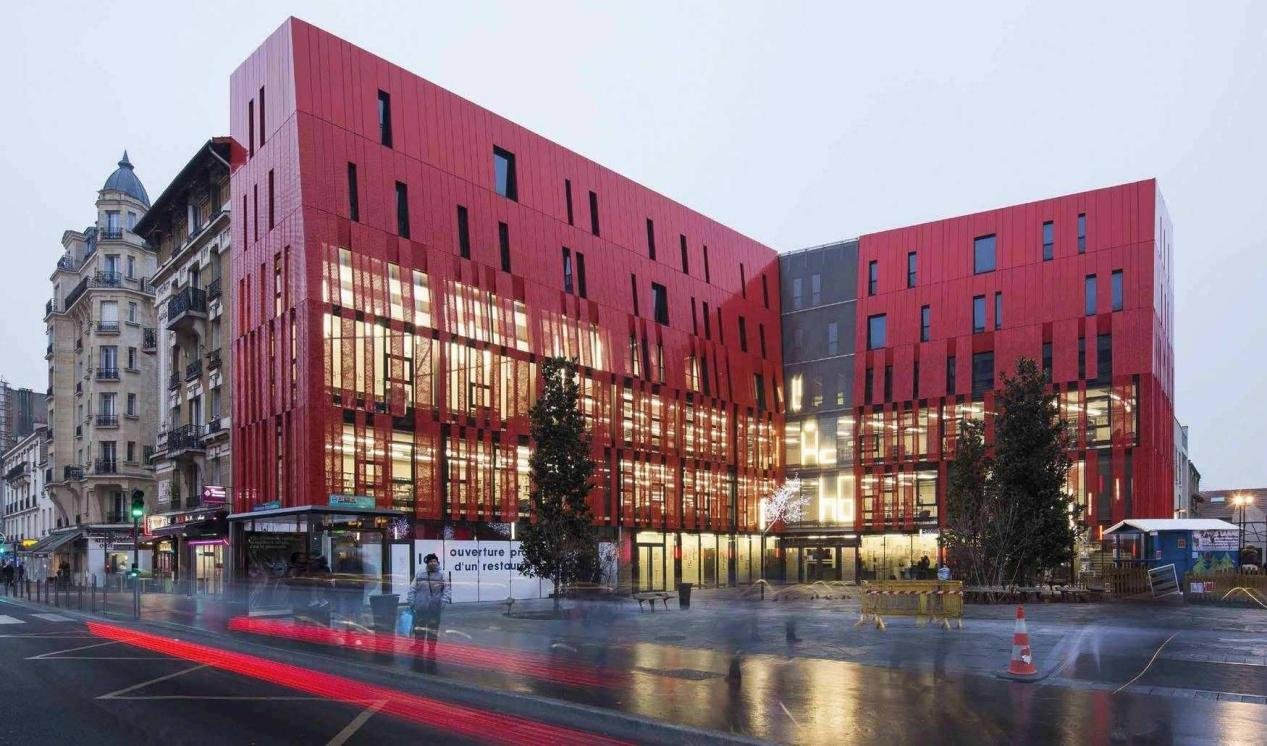 PVDF aluminum finish is widely specified by architects and building envelope engineers when project goals include exceptional UV stability, chemical resistance, and long-term color retention. Choosing the correct finish reduces maintenance cycles, protects brand assets and reduces total cost of ownership. This guide provides practical specification language, measurable QA targets, installation best practices, and procurement controls that architects, façade engineers, and contractors can apply directly to project documentation.
 PVDF systems exhibit balanced hardness and flexibility, enabling bending and forming in fabrication. Adhesion is validated by ASTM D3359 cross-cut tests and pull-off adhesion metrics. For formed or perforated panels, ensure the supplier supplies bend radii guidance and post-bake inspection protocols to avoid cohesion failure or micro-cracking at highly deformed edges.


 PVDF systems exhibit balanced hardness and flexibility, enabling bending and forming in fabrication. Adhesion is validated by ASTM D3359 cross-cut tests and pull-off adhesion metrics. For formed or perforated panels, ensure the supplier supplies bend radii guidance and post-bake inspection protocols to avoid cohesion failure or micro-cracking at highly deformed edges.