Spider Fittings for Glass: Everything You Need To Know
Introduction
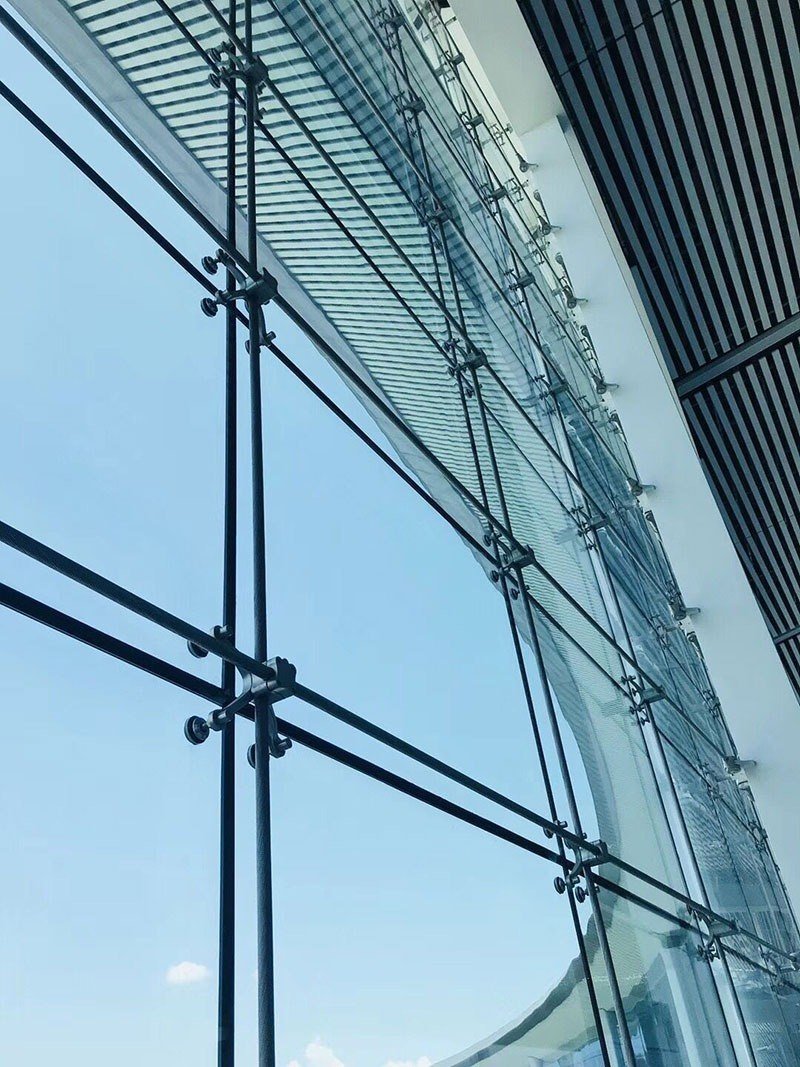
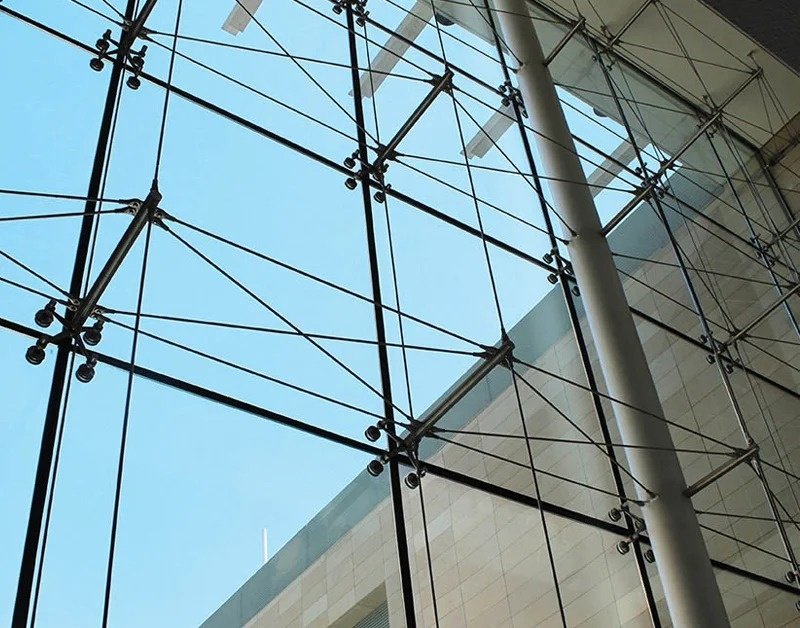
A spider glass system is the preferred solution for architects and façade engineers who want expansive, minimally framed glazing. Point-fixed spider fittings support glass at discrete nodes, producing uninterrupted sightlines, generous daylighting, and a refined aesthetic. The opportunity is clear: spider systems enable dramatic atria, canopies and feature façades that conventional framing cannot match. The challenge is technical: concentrated point loads, strict fabrication tolerances, and meticulous installation and QC procedures all demand early coordination between design, fabrication and installation teams. This article presents a practical, specification-focused overview for specifiers, contractors and developers considering a spider glass system for commercial projects.
Spider glass system — Technical Features
Materials and grades for a spider glass system
Spider fittings are typically machined from corrosion-resistant stainless steels such as 316L or duplex S32205. Material selection should reflect exposure: 316L is suitable for most urban environments while duplex grades are preferred for coastal or industrial sites where chloride resistance and higher yield strength reduce risk. Typical components include two-, three- and four-arm spiders, male/female spigots, pivot assemblies, pressure plates, washers and decorative covers. Fasteners must be matched for galvanic compatibility. Specify mechanical properties, heat numbers and surface finish (electropolish or passivation) in the contract to control performance.
Glass types, edge treatments and point-fixing details for spider glass system
Glass for a spider glass system is usually toughened (tempered) or laminated with PVB or SGP interlayers; laminated constructions are used where post-breakage integrity or acoustic performance is required. Edge treatment—polished, ground or seamed—reduces stress concentrations and spontaneous breakage risk. Holes for fixings must be drilled to tolerances and chamfered, with polished hole edges to remove micro-cracks. Designers must also specify backing plates, load-distributing washers and gaskets to spread point loads and avoid excessive local stresses. Typical glass thicknesses range from 10 mm to 25 mm depending on span, spider spacing and required safety margins.
Spider glass system — Design Considerations
Structural analysis, load paths and acceptance criteria for spider glass system
Designing a spider glass system requires rigorous structural modelling. Loads concentrate at spider nodes; therefore the supporting beams, anchors and substructure must be sized to transfer point loads safely into the primary structure. Consider wind uplift and suction, dead loads, maintenance or access loads, thermal gradients and accidental impact. Finite element analysis (FEA) is recommended for generating glass stress maps and assessing local bending around fixings. Acceptance criteria commonly include deflection limits (for example span/60 to span/100), glass stress limits below fracture thresholds and design safety factors consistent with local building codes and ASTM E1300 guidelines.
Movement accommodation, tolerances and connection detailing for spider glass system
Façade systems must accommodate building movement. Typical details include slotted anchor holes, spherical bearings at spider joints and compressible gaskets that allow minor rotations and translations without inducing harmful stresses in the glass. Specify installation tolerances (commonly ±3–6 mm for node positions) and tighter tolerances for primary sightlines. Provide clear drainage and back-venting around nodes to prevent trapped water and freeze-thaw damage. Define gasket durometer and compression-set limits to maintain long-term sealing performance.
Installation and Practical Guidance for spider glass system
Pre-installation planning and site survey for spider glass system
Successful installation begins in procurement. Require a detailed as-built survey and datum confirmation before fabrication. Approve shop drawings and a full-size mock-up demonstrating node aesthetics, leak performance and access for maintenance. Coordinate with structural, mechanical and electrical trades to avoid clashes at nodes and ensure the supporting structure is available and toleranced to accept point loads. Pre-assembly of spider sub-assemblies in factory conditions reduces site adjustments and improves repeatability.
Installation sequence, tools and on-site quality control for spider glass system
Installers should use calibrated torque wrenches, rated vacuum glass lifters sized for each panel, protective edge pads and certified lifting gear. A typical sequence is: fix anchors and datum plates → install support brackets → mount spider assemblies to datum → lift and position glass panels → insert gaskets and pressure plates → apply sealant where required and perform final torque checks. Maintain detailed installation logs (torque records, batch numbers, photographs) for every node. Conduct post-installation checks such as static deflection verification and site water penetration testing to confirm compliance before handover.
Performance, Testing, and Maintenance of a spider glass system
Testing protocols and performance metrics for spider glass system
Specify laboratory and site tests aligned with the project’s risk profile. Use ASTM E1300 for glass strength selection, ASTM E330 or local equivalents for wind and static load testing, and cyclic fatigue testing for connectors and bearings in seismic or dynamic environments. Conduct water penetration tests in a chamber or by pressurized spray on mock-ups and sampled panels. For sealants, require adhesion and compatibility testing with stainless steel and glass finishes. Retain test certificates and ensure traceability of tested samples to installed batches.
Maintenance strategy and lifecycle planning for spider glass system
Maintenance planning should be part of the contract. Implement annual visual inspections to check gaskets, sealants and fasteners; schedule detailed inspections every 3–5 years and always after severe weather events or impacts. Replace sacrificial items (seals, washers, protective covers) proactively to prevent secondary damage. Maintain a spares kit consisting of common spider arms, bolts, gaskets and covers to minimize downtime. Establish approved cleaning agents and maintenance procedures to preserve coatings and stainless finishes.
Selection, Trade-offs and Comparison
When to specify a spider glass system
Specify a spider glass system when unobstructed transparency and a minimal metal-to-glass ratio are primary design objectives and the project budget supports increased engineering, fabrication and installation quality control. Spider façades are especially well-suited to atria, canopies, entrance lobbies, luxury retail and corporate headquarters where the façade’s visual performance is a core value driver.
Alternatives compared and trade-offs
Alternatives include stick curtain wall, unitized curtain wall and structural glazing. Unitized systems reduce site labour and produce consistent factory QA but increase transport and interface coordination. Structural glazing provides a seamless glass appearance with fewer discrete nodes but depends heavily on sealant longevity and edge detailing.
Case Example and Application
Mini case study — Corporate atrium with spider glass system
A corporate headquarters required a column-free glazed atrium 10 m × 6 m to maximize daylight and brand presence. The design team specified a spider glass system using 12.8 mm laminated toughened glass (two 6 mm lites with a 0.8 mm interlayer), four-arm 316L stainless spiders and spherical bearings to accommodate thermal movement. FEA validated glass stress and deflection, while laboratory samples were tested for wind loads and connector fatigue. Factory pre-assembly and witness inspections reduced on-site rework and improved first-time acceptance.
Outcomes and lessons for project teams
The installed façade reduced visible framing by approximately 70%, achieved targeted acoustic performance using laminated glass, and confirmed deflections within specified limits during site verification. Key lessons: coordinate early with structural and services designers, require supplier QC documentation and batch traceability, budget for mock-ups and spare parts, and include clear maintenance provisions in the handover package.
Addressing Common Concerns and Objections
Breakage risk and occupant safety in a spider glass system
Mitigate breakage risk by specifying laminated glass with robust interlayers such as SGP for enhanced post-breakage capacity, ensuring edge quality and hole drilling meet fabricator standards, and designing redundancy into critical fixings. Include impact testing for high-risk zones and plan for rapid replacement procedures and spare parts storage.
Corrosion resistance, finish and longevity
Control corrosion risk by specifying appropriate stainless grades, electropolish or passivation finishes, and documented surface treatment procedures. Require material certificates and finish verification at delivery. In severe environments consider duplex stainless or additional sacrificial protection. A documented maintenance schedule further preserves longevity.
Actionable Recommendations and Specification Checklist
Checklist for specifiers and decision makers
• Define performance objectives: visible transmittance, U-value, acoustic Rw, service life and maintenance window
• Require FEM stress maps and ASTM E1300 calculations for glass selection
• Specify glass construction, interlayer type, edge finish and hole fabrication standards
• Specify spider material grade, surface finish, and dimensional tolerances with QC acceptance criteria
• Require factory dimensional inspection reports, material certificates, and torque-checked sub-assembly records
• Include mock-up approvals, witnessed factory tests and contractual hold-points
• Provide a maintenance schedule, spare parts kit and installation training at handover
Procurement and contractual clauses to include
Include supplier warranties for materials and workmanship, remedies for defects, and clear acceptance tests. Require factory QC witness points, batch traceability, and liability provisions for onsite impacts. Hold-points for mock-ups and site tests protect owners and reduce disputes.
Manufacturing and Quality Control Best Practices
Fabrication tolerances and inspection for spider glass system
Manufacturers should maintain tight CNC tolerances (often ±0.2 mm for critical hole patterns) and operate to a documented inspection plan including first-piece inspection, in-process checks and final dimensional verification with calibrated equipment. Provide dimensional reports, calibrated torque records for sub-assemblies and photographic evidence for each batch.
Surface treatment, passivation and batch traceability for spider glass system
Surface finishing—electropolishing, passivation and controlled cleaning—significantly improves corrosion resistance and reduces maintenance. Require passivation certificates, specify packaging to protect finished surfaces during transport, and demand batch traceability with heat numbers and material certificates.
FAQ
Technical FAQs
Q1: What is a spider glass system?
A spider glass system is a point-fixed glazing solution where stainless steel spider fittings transfer glass loads to the supporting structure.
Q2: How is glass thickness chosen for a spider glass system?
Glass thickness is chosen through structural analysis based on panel size, spider spacing, wind load, and deflection limits.
Maintenance and Procurement FAQs
Q3: What manufacturing quality controls apply to spider fittings?
Manufacturing QC should include material certificates, CNC dimensional inspection reports, surface finish verification, and torque-checked sub-assembly records.
Q4: How often should a spider glass system be inspected?
Conduct annual visual inspections and detailed inspections every 3–5 years or after severe weather events.
Q5: Can spider glass systems be used in seismic zones?
Yes. Connections must accommodate movement and be validated by dynamic analysis and cyclic testing.
Conclusion
A spider glass system delivers outstanding architectural and daylighting performance when engineering, manufacturing and installation are executed to high standards. With FEM validation, strict factory QC, mock-up approvals and a robust maintenance strategy, spider-fitted façades provide durable performance and premium visual impact for landmark commercial projects.
Looking for custom-designed ceilings, walls, or facades to elevate your project? Explore PRANCE Design’s integrated design and manufacturing solutions, and create the perfect fit for your architectural needs today!

 A spider glass system is the preferred solution for architects and façade engineers who want expansive, minimally framed glazing. Point-fixed spider fittings support glass at discrete nodes, producing uninterrupted sightlines, generous daylighting, and a refined aesthetic. The opportunity is clear: spider systems enable dramatic atria, canopies and feature façades that conventional framing cannot match. The challenge is technical: concentrated point loads, strict fabrication tolerances, and meticulous installation and QC procedures all demand early coordination between design, fabrication and installation teams. This article presents a practical, specification-focused overview for specifiers, contractors and developers considering a spider glass system for commercial projects.