Comparing Aluminum vs Steel Curtain Walls: Performance, Cost, and Long-Term Maintenance Considerations
The building envelope is arguably the most critical component of a modern commercial structure. It defines the building’s aesthetic identity, dictates its energy performance, and serves as the primary barrier against the elements. At the heart of this envelope is the curtain wall system, and the choice of its framing material—primarily aluminum or steel—is one of the most consequential decisions an architect, developer, or contractor will make.
For decades, the aluminum curtain wall has been the industry’s undisputed leader. Its remarkable combination of light weight, high strength, exceptional corrosion resistance, and design flexibility has made it the default specification for projects ranging from modest office parks to soaring skyscrapers. However, steel curtain wall systems, offering unique structural and aesthetic benefits, present a compelling alternative for specific applications.
Understanding the nuanced trade-offs between these two materials is not just a technical exercise; it’s a critical step in balancing design intent with budget, long-term performance, and constructability. This in-depth comparison will analyze the performance metrics, total cost of ownership, and long-term maintenance considerations for both aluminum and steel, providing specifiers with the data-driven insights needed to make the right choice.
The Dominance of the Aluminum Curtain Wall: Why It’s the Industry Standard
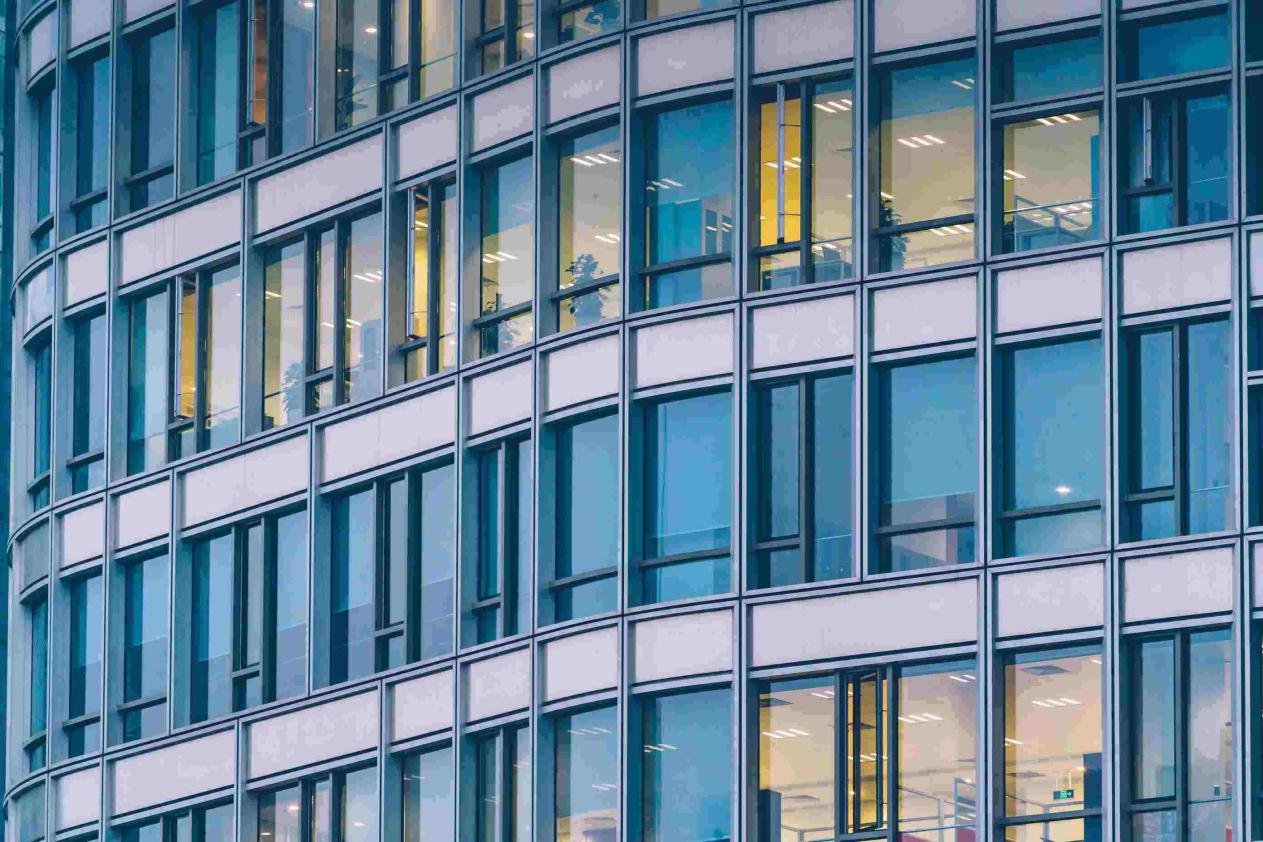
The widespread adoption of the aluminum curtain wall is no accident. It stems from a set of inherent material properties that make it uniquely suited for large-scale facade applications.
Unpacking the Material Properties of Aluminum
Aluminum’s primary advantage is its high strength-to-weight ratio. It is approximately one-third the weight of steel, yet it can be extruded and alloyed (typically 6063-T5 or 6063-T6 for curtain walls) to provide significant structural strength. This low weight reduces the dead load on the building’s primary structure, potentially leading to savings in foundation and column sizing.
Furthermore, aluminum is naturally corrosion-resistant. When exposed to air, it forms a hard, transparent oxide layer (passivation) that protects the metal from further oxidation. Unlike carbon steel, aluminum does not rust or degrade, making it an ideal choice for exterior applications in virtually any climate. This inherent durability is a cornerstone of its value proposition.
From a sustainability perspective, aluminum is also a highly desirable material. It is one of the most recycled and recyclable materials on earth, retaining its properties indefinitely. The aluminum used in a curtain wall system today likely contains a high percentage of recycled content and can be 100% recycled at the end of the building’s life, contributing to a circular economy and LEED credits.
Design Flexibility and Finishing Options
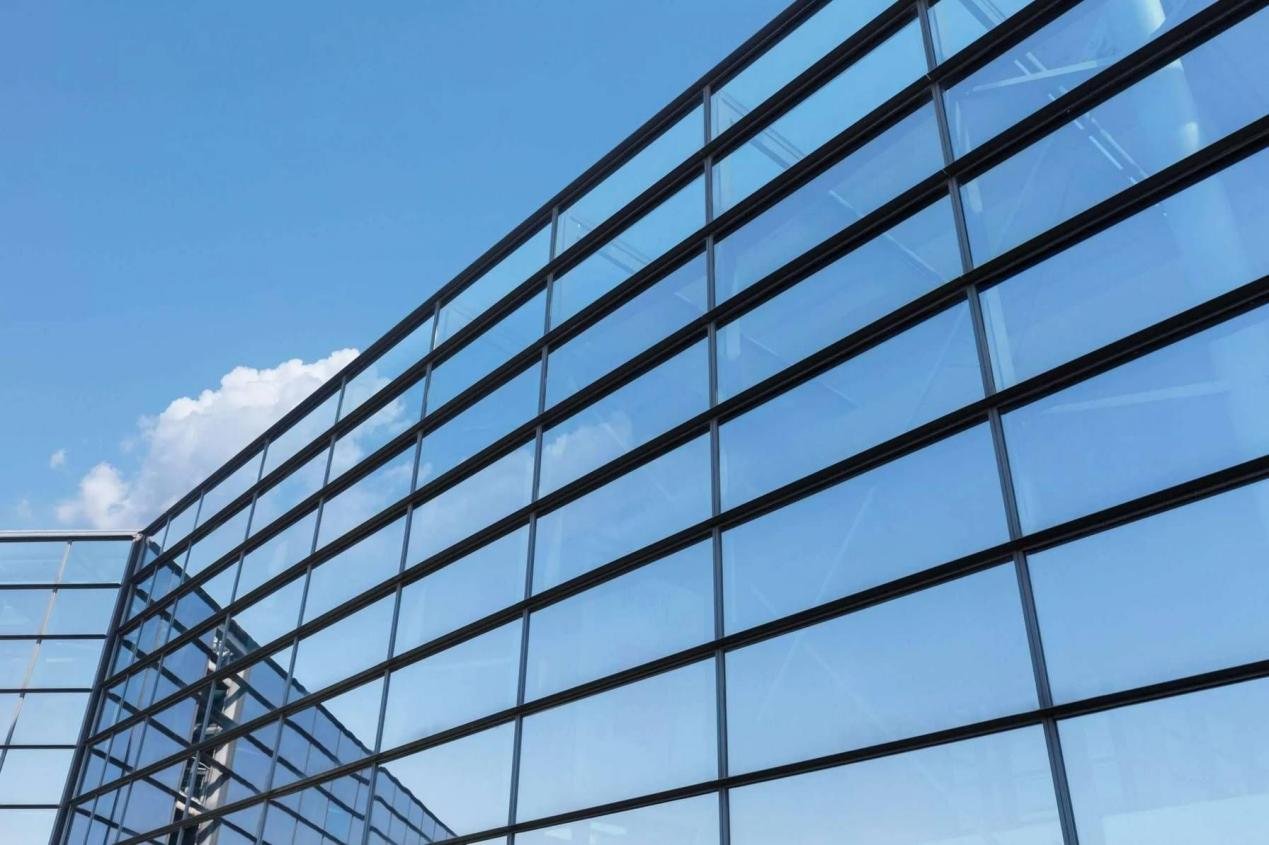
For architects, aluminum’s greatest appeal is its near-limitless design flexibility. The material is easily extruded, a process that pushes a heated aluminum billet through a custom die. This allows for the creation of incredibly complex and precise profiles for mullions, transoms, and pressure plates. Whether the design calls for a sharp, rectilinear profile, a soft, bullnose cap, or an integrated channel for LED lighting, it can likely be achieved through extrusion.
This design versatility extends to the finishes. An aluminum curtain wall is never left as raw metal; it is factory-finished to provide both aesthetic appeal and enhanced durability. The two primary finishing standards are:
Anodizing (AAMA 611): An electrochemical process that thickens the natural oxide layer, creating an extremely hard, abrasion-resistant finish. It offers a clear or metallic look (bronze, black) but has a limited color palette.
Architectural Coatings (AAMA 2603, 2604, 2605): These are liquid or powder coatings. The gold standard is the 70% PVDF liquid coating (Kynar 500® or Hylar 5000®) meeting AAMA 2605. This finish provides outstanding resistance to fading, chalking, and UV degradation, offering a nearly unlimited color spectrum and warranties often exceeding 20 years.
Fabrication and Installation Efficiencies
The lightweight nature of aluminum directly translates to efficiencies in the shop and on the field. In the fabrication plant, aluminum profiles are easier to handle, cut, drill, and machine than heavy steel sections. This simplifies the assembly of both “stick-built” systems (where components are assembled on-site) and “unitized” systems (where large, pre-glazed panels are fabricated in a controlled factory environment).
On the job site, the lower weight of an aluminum curtain wall panel or stock length simplifies logistics. It allows for the use of smaller, less expensive cranes for lifting and setting panels. Installation crews can often handle the material more easily, potentially speeding up installation timelines and reducing labor costs. Steel, by contrast, requires heavy-duty lifting equipment and often specialized on-site welding, increasing complexity and cost.
Steel Curtain Walls: The Case for Structural Strength and Niche Applications
While aluminum dominates the market, steel curtain wall systems serve a critical role where the performance demands exceed aluminum’s capabilities.
Unmatched Structural Capacity and Span
This is steel’s number one advantage. Steel has a modulus of elasticity approximately three times greater than that of aluminum. In practical terms, this means it is significantly stiffer and deflects far less under the same load.
This property allows for two distinct design possibilities:
Massive Spans: For monumental atriums, grand lobbies, or specialty glass structures with unsupported spans of 30 feet or more, a steel-framed system may be the only viable option. An aluminum mullion would need to be impractically deep (12-15 inches or more) and bulky to handle such a span, whereas a steel member can achieve it with surprising slimness.
Slender Profiles: Because steel is so strong, it can achieve the same structural performance as aluminum with a much smaller profile. Architects often chase the “minimal frame” or “all-glass” aesthetic. Steel systems allow for exceptionally narrow sightlines, maximizing the glazed area and creating a lighter, more transparent feel that aluminum struggles to replicate.
Fire-Rating and Specialized Performance
Aluminum has a relatively low melting point (around 1,220°F / 660°C). As such, a standard aluminum curtain wall offers virtually no resistance to fire and cannot be used in applications requiring a fire-rated assembly.
Steel, with its much higher melting point (around 2,500°F / 1,370°C), is the material of choice for fire-rated curtain walls. When combined with specialized intumescent gaskets and fire-rated glazing, steel framing systems can achieve fire-resistance ratings of 60, 90, or even 120 minutes, meeting strict building codes for locations like stairwells, property lines, and interior atriums.
Beyond fire performance, steel’s inherent strength makes it suitable for other high-performance applications, such as blast-resistant, ballistic-resistant, and hurricane-impact systems where maximum durability is required.
Aesthetic Considerations: Slender Profiles vs. Bulk
The aesthetic trade-off is clear: steel offers slender minimalism, while aluminum is the versatile workhorse. However, steel’s benefits come with a significant complication: corrosion.
Carbon steel, the most common type used structurally, will rust aggressively if its protective coating is breached. This necessitates robust, multi-layer finishing processes (such as galvanizing, zinc-rich primers, and high-performance topcoats) that must be meticulously applied and maintained. Any scratch or chip that exposes the base metal becomes a vector for failure.
Stainless steel is an alternative that offers the strength of steel and the corrosion resistance of aluminum, but it comes at a premium price point that places it outside the budget of most conventional projects.
Head-to-Head Performance: Analyzing an Aluminum Curtain Wall vs. Steel
When comparing the two materials directly, specifiers must focus on thermal, structural, and long-term performance metrics.
Thermal Performance and Energy Efficiency
This is a common point of confusion. Both aluminum and steel are excellent thermal conductors, which is bad for a building envelope. A non-thermally-broken metal frame will act as a “thermal bridge,” rapidly transferring heat in the winter and cold in the summer, leading to massive energy loss and potential condensation problems.
To combat this, all modern, high-performance curtain walls—both aluminum and steel—are “thermally broken.
In an aluminum curtain wall, this is typically achieved by using a structural insulator, like a polyamide strut or a “poured-and-debridged” polyurethane system, to physically separate the exterior and interior metal profiles.
Steel systems use similar (though often less sophisticated) thermal break technologies.
Because aluminum can be easily extruded into complex, multi-chambered profiles, a high-performance aluminum curtain wall can often achieve superior thermal performance (lower U-values) than a comparable steel system. Advanced aluminum systems are central to meeting today’s stringent energy codes (like ASHRAE 90.1) and achieving goals for net-zero buildings. It’s a myth that aluminum is “bad” for energy; a thermally-broken aluminum system is an exceptional performer.
Structural Loading and Deflection Limits
As discussed, steel is stiffer. This becomes critical in high-wind zones or on tall buildings where wind-induced deflection must be strictly controlled. While an aluminum system can be engineered for these applications, it often requires deeper mullions (e.g., 10″ or 12″ systems) or the insertion of steel reinforcing inside the aluminum mullion.
This hybrid approach—using a steel stiffener within an aluminum curtain wall—is a common and cost-effective solution. It provides the structural brawn of steel precisely where needed, while retaining the finishing, fabrication, and thermal break advantages of the aluminum exterior.
Acoustic Isolation and Condensation Resistance
Acoustic performance (measured by STC/OITC ratings) is overwhelmingly dependent on the insulating glass unit (IGU), not the frame material. The use of laminated glass, varying glass thicknesses, and wide air gaps in the IGU will do far more to block sound than the choice between aluminum and steel.
Condensation resistance, however, is directly tied to the frame’s thermal performance. A well-designed, thermally-broken aluminum curtain wall with a high Condensation Resistance Factor (CRF) will keep the interior metal surfaces warm, preventing condensation from forming even in cold climates.
Feature
Aluminum Curtain Wall
Steel Curtain Wall
Structural Span
Good; requires deeper profiles for long spans
Excellent; allows for very slender profiles
Thermal Performance
Excellent (with modern thermal breaks)
Good to Excellent (also requires thermal breaks)
Corrosion Resistance
Excellent (inherent)
Poor (Carbon Steel); Excellent (Stainless)
Initial Cost
Moderate
High (Carbon Steel) to Very High (Stainless)
Total Cost of Ownership: A Detailed Aluminum Curtain Wall Cost Analysis
A B2B decision hinges on cost, but “cost” must be evaluated across the entire project lifecycle, not just the initial material quote.
Initial Investment: Material and Fabrication Costs
On a raw material basis, carbon steel is cheaper than aluminum. However, this is misleading. The total fabricated cost of a steel curtain wall is almost always significantly higher.
Steel fabrication is a more specialized, labor-intensive, and slower process. It requires heavy-duty saws, precise welding, and extensive grinding and finishing. Extruding aluminum is a highly automated and efficient process, and its fabrication (cutting, drilling, screwing) is fast and standardized.
Furthermore, the finishing required for carbon steel (galvanizing, multi-coat painting) is a costly, multi-step process, whereas aluminum finishing (anodizing, PVDF) is a streamlined, single-source operation. Stainless steel, which avoids the finishing issue, is often two to four times the material cost of aluminum.
Installation Labor and Equipment Requirements
Installation is where the cost difference of an aluminum curtain wall becomes most apparent. As noted, the lighter weight reduces crane time, simplifies material handling, and can accelerate crew productivity. A unitized aluminum curtain wall system, where panels are pre-glazed in the factory, is the industry standard for speed, quality control, and installation efficiency on mid-rise and high-rise projects.
The sheer weight of steel systems demands more robust (and expensive) lifting equipment, more on-site coordination, and often more specialized labor for any field welding or adjustments. These factors add significant, often-overlooked costs to the project budget.
Long-Term Maintenance and Lifecycle Value
This is where the aluminum curtain wall truly pulls away. The long-term maintenance of a high-performance PVDF or Class I anodized finish is minimal. It requires only periodic cleaning with mild detergent and water (per AAMA 609 and 610) to remove environmental grime. The finish itself is warrantied against failure for decades, and the underlying aluminum will not corrode.
Carbon steel, conversely, is a maintenance liability. Its protective coating is its only defense against rust. A single deep scratch from a window washing rig, a settlement-induced joint failure, or a simple coating imperfection can allow water to penetrate. Once rust begins (especially “rust jacking,” where the rust expands and breaks a joint), it is incredibly difficult and expensive to remediate, and can compromise the structural integrity of the facade.
This risk makes the total cost of ownership for a carbon steel system much higher, while the “install-and-forget” nature of an aluminum curtain wall provides predictable, low-cost value for the life of the building.
Specification Guidance: Making the Right Choice for Your Project
The choice between aluminum and steel is ultimately a question of “right tool for the job.”
Project Spotlight: A Tale of Two Facades (Hypothetical Case)
Scenario 1: The 15-Story Corporate HQ
Project: A 15-story, 250,000 sq. ft. commercial office tower seeking LEED Gold.
Goals: Speed of construction, excellent thermal performance (U-value < 0.35), and a 20-year finish warranty.
Analysis: The floor-to-floor spans (13.5 ft) are easily handled by a standard 7.5″ aluminum system. The project’s scale and timeline strongly favor a unitized solution.
Recommendation: A unitized, thermally-broken aluminum curtain wall system with a 70% PVDF (AAMA 2605) finish. This solution delivers on all project goals: thermal performance, speed, quality control, and long-term, low-maintenance durability.
Scenario 2: The Historic Museum Expansion
Project: A 60-foot-tall, structurally-glazed lobby connecting two historic masonry buildings. The design requires fire-rated partitions separating the new lobby from the old exhibit halls.
Goals: Maximum transparency, minimal structural profiles for the 60-foot span, and a 90-minute fire rating on interior partitions.
Analysis: An aluminum curtain wall cannot meet the 60-foot span without massive, visually disruptive mullions. It also cannot meet the 90-minute fire-rating requirement.
Recommendation: A custom-engineered, solid-steel curtain wall for the lobby facade to achieve the required strength with slender profiles. For the interior, a 90-minute, fire-rated steel framing system is specified. This is a classic example of where steel’s unique properties are essential.
Addressing Common Objections to the Aluminum Curtain Wall
Objection 1: “Aluminum isn’t strong enough for my project’s high wind loads.”Answer: This is a misconception. An aluminum curtain wall system is fully engineered to meet project-specific design pressures. For exceptional loads, the solution is not to abandon aluminum, but to use a deeper mullion profile (e.g., 10″ or 12″) or to integrate steel reinforcing within the aluminum extrusion, combining the best of both materials.
Objection 2: “Aluminum is an energy-waster due to thermal bridging.”Answer: This is only true for non-thermally-broken systems, which are no longer used in modern construction. A high-performance, thermally-broken aluminum curtain wall uses advanced polyamide struts or poured-and-debridged systems to deliver outstanding U-values and condensation resistance, fully meeting or exceeding today’s stringent energy codes.
Key Specification Checklist for Your Next Aluminum Curtain Wall
When specifying an aluminum curtain wall, ensure these points are covered in your documentation to guarantee performance and quality.
Define Performance Criteria: Clearly state the required design wind load (psf), water infiltration test pressure (e.g., 15 psf), and air infiltration limits (e.g., < 0.06 cfm/ft²).
Set Thermal Targets: Specify the maximum allowable system U-value (e.g., U-0.38) and the minimum Condensation Resistance Factor (CRF) based on NFRC simulations.
Select System Type: Determine if the project is best suited for a stick-built, unitized, or semi-unitized system. This impacts cost, timeline, and quality control.
Specify the Finish Standard: Do not just ask for “paint.” Demand an AAMA 2605-compliant 70% PVDF finish for the highest durability, or an AAMA 611, Class I anodized finish.
Mandate Quality Control:Require that the aluminum curtain wall manufacturer provides certified test reports for the specified system. Specify adherence to quality control protocols, including material sourcing verification, stringent fabrication tolerances, and in-house testing capabilities for water and air infiltration (e.g., AAMA 501.2 field testing).
FAQ
Q1: What is the main advantage of an aluminum curtain wall?
A1: The primary advantage is its unmatched combination of light weight, high strength, and excellent corrosion resistance. This makes an aluminum curtain wall easier and cheaper to fabricate, transport, and install, all while offering a 50+ year lifespan with minimal maintenance and extensive design flexibility.
Q2: Is a steel curtain wall more expensive?
A2: Yes, almost always. While raw carbon steel is cheap, the fabrication process (welding, handling heavy material) is specialized and slow. Furthermore, the robust, multi-layer coating required to prevent rust adds significant cost. Stainless steel is even more expensive, making an aluminum curtain wall the cost-effective choice for over 90% of projects.
Q3: How long does an aluminum curtain wall last?
A3: The aluminum curtain wall system itself, including the extrusions and gaskets, can easily last 50 years or more. The high-performance 70% PVDF (AAMA 2605) finishes applied to the aluminum typically carry 20-year warranties against fading and chalking, but often perform well for 30-40 years before showing significant wear.
Q4: Can aluminum curtain walls be fire-rated?
A4: Generally, no. Aluminum has a low melting point and loses its structural integrity quickly in a fire. Therefore, a standard aluminum curtain wall is not fire-rated. Applications requiring a fire-resistance rating (e.g., 60 or 90 minutes) must use specialized fire-rated systems, which are typically made of steel.
Q5: How do you maintain an aluminum curtain wall?
A5: Maintenance is extremely simple. An aluminum curtain wall with an anodized or PVDF finish should be cleaned periodically (e.g., annually or semi-annually) with water and a mild, non-abrasive detergent, as outlined in AAMA 610. This removes accumulated dirt and preserves the aesthetic of the finish, which is designed to be highly resistant to weathering.
Looking for custom-designed ceilings, walls, or facades to elevate your project? Explore PRANCE Design’s integrated design and manufacturing solutions, and create the perfect fit for your architectural needs today!

 The building envelope is arguably the most critical component of a modern commercial structure. It defines the building’s aesthetic identity, dictates its energy performance, and serves as the primary barrier against the elements. At the heart of this envelope is the curtain wall system, and the choice of its framing material—primarily aluminum or steel—is one of the most consequential decisions an architect, developer, or contractor will make.
For decades, the aluminum curtain wall has been the industry’s undisputed leader. Its remarkable combination of light weight, high strength, exceptional corrosion resistance, and design flexibility has made it the default specification for projects ranging from modest office parks to soaring skyscrapers. However, steel curtain wall systems, offering unique structural and aesthetic benefits, present a compelling alternative for specific applications.
Understanding the nuanced trade-offs between these two materials is not just a technical exercise; it’s a critical step in balancing design intent with budget, long-term performance, and constructability. This in-depth comparison will analyze the performance metrics, total cost of ownership, and long-term maintenance considerations for both aluminum and steel, providing specifiers with the data-driven insights needed to make the right choice.
 The widespread adoption of the aluminum curtain wall is no accident. It stems from a set of inherent material properties that make it uniquely suited for large-scale facade applications.
 For architects, aluminum’s greatest appeal is its near-limitless design flexibility. The material is easily extruded, a process that pushes a heated aluminum billet through a custom die. This allows for the creation of incredibly complex and precise profiles for mullions, transoms, and pressure plates. Whether the design calls for a sharp, rectilinear profile, a soft, bullnose cap, or an integrated channel for LED lighting, it can likely be achieved through extrusion.
This design versatility extends to the finishes. An aluminum curtain wall is never left as raw metal; it is factory-finished to provide both aesthetic appeal and enhanced durability. The two primary finishing standards are:
 While aluminum dominates the market, steel curtain wall systems serve a critical role where the performance demands exceed aluminum’s capabilities.
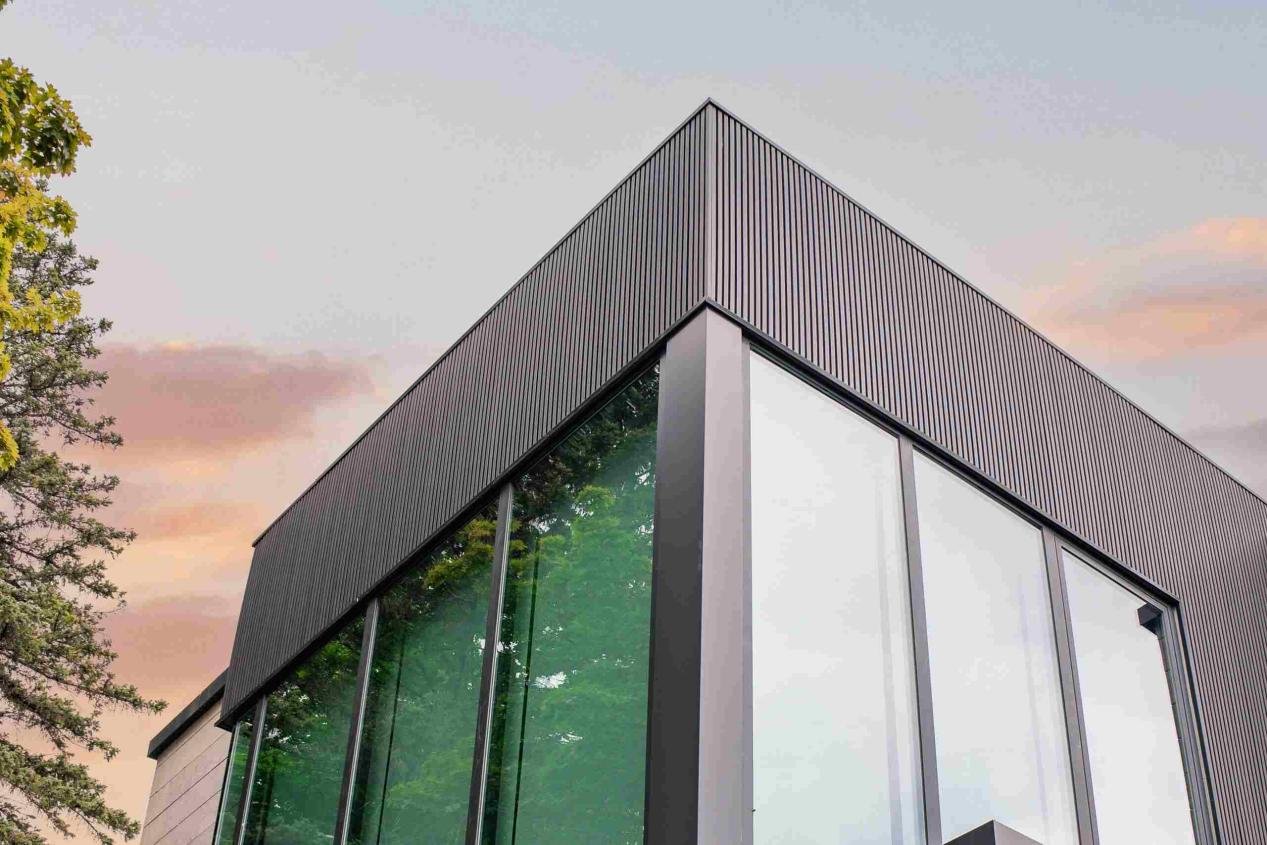 When comparing the two materials directly, specifiers must focus on thermal, structural, and long-term performance metrics.
 A B2B decision hinges on cost, but “cost” must be evaluated across the entire project lifecycle, not just the initial material quote.
 Installation is where the cost difference of an aluminum curtain wall becomes most apparent. As noted, the lighter weight reduces crane time, simplifies material handling, and can accelerate crew productivity. A unitized aluminum curtain wall system, where panels are pre-glazed in the factory, is the industry standard for speed, quality control, and installation efficiency on mid-rise and high-rise projects.
The sheer weight of steel systems demands more robust (and expensive) lifting equipment, more on-site coordination, and often more specialized labor for any field welding or adjustments. These factors add significant, often-overlooked costs to the project budget.
 The choice between aluminum and steel is ultimately a question of “right tool for the job.”
 Objection 1: “Aluminum isn’t strong enough for my project’s high wind loads.”
Answer: This is a misconception. An aluminum curtain wall system is fully engineered to meet project-specific design pressures. For exceptional loads, the solution is not to abandon aluminum, but to use a deeper mullion profile (e.g., 10″ or 12″) or to integrate steel reinforcing within the aluminum extrusion, combining the best of both materials.
Objection 2: “Aluminum is an energy-waster due to thermal bridging.”
Answer: This is only true for non-thermally-broken systems, which are no longer used in modern construction. A high-performance, thermally-broken aluminum curtain wall uses advanced polyamide struts or poured-and-debridged systems to deliver outstanding U-values and condensation resistance, fully meeting or exceeding today’s stringent energy codes.
 When specifying an aluminum curtain wall, ensure these points are covered in your documentation to guarantee performance and quality.